
5 Highest Value Integrations for Your KMS in 2026
February 3, 2026
By
Evie Secilmis
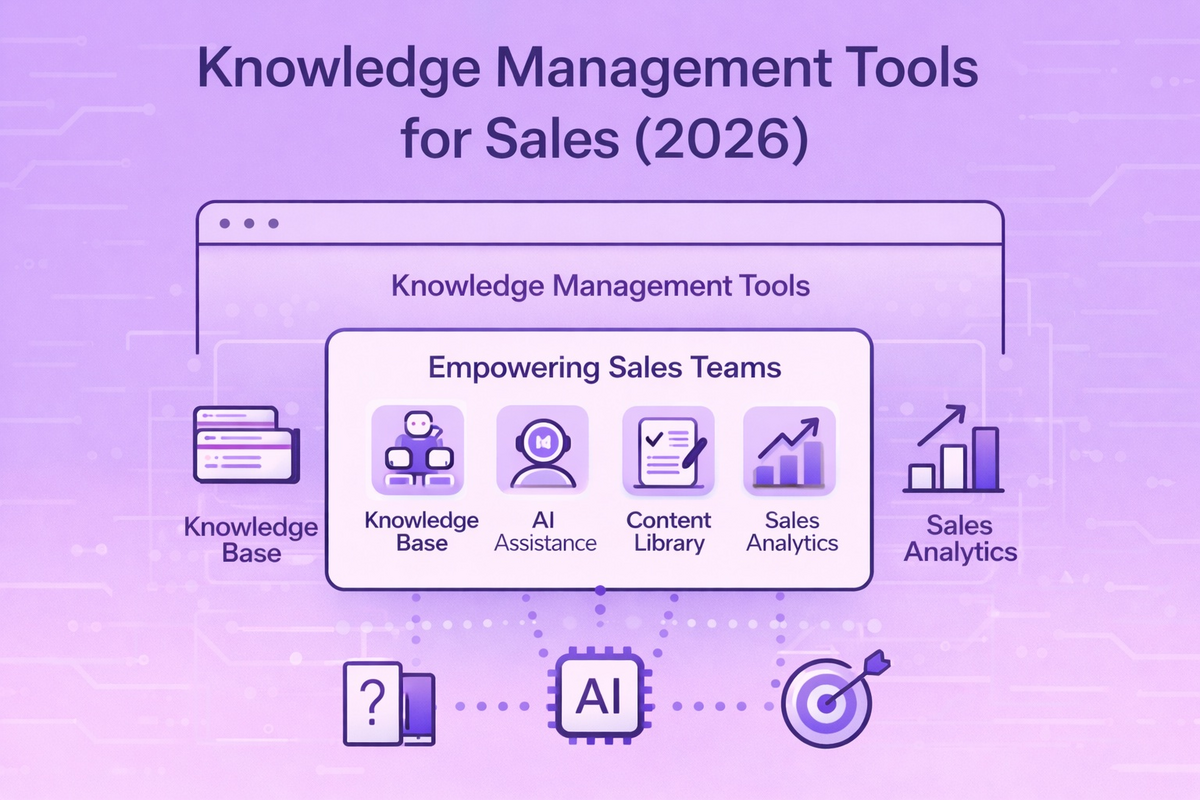

Every organization has the same problem: critical knowledge is scattered across hundreds of documents. It's locked in people's heads or buried in Slack threads. When someone asks a question, the answer exists somewhere, but finding it kills productivity.
This is why the knowledge management system definition for 2026 is changing. It’s no longer about a simple digital filing cabinet. The best enterprise knowledge management platforms of 2025 and 2026 act as a central brain for your company, understanding that deep integrations drive the most value. They connect all your tools to surface the right information, instantly.
This is the knowledge management challenge. In 2026, organizations are turning to knowledge management systems to solve it. These platforms centralize institutional knowledge, making it searchable, shareable, and actionable. Whether you're responding to RFPs, onboarding new employees, or answering customer questions, a knowledge management system ensures the right information reaches the right people at the right time.
What Is a Knowledge Management System, Really?
A knowledge management system (KMS) is a centralized platform that captures, organizes, stores, and distributes an organization's collective knowledge. Think of it as the single source of truth for everything your team needs to know.
Traditional knowledge management relied on static wikis and shared drives. Information quickly became outdated, duplicated, or impossible to find. Modern knowledge management systems use AI and automation to keep content fresh, suggest relevant information, and connect knowledge across departments.
Knowledge management systems serve several critical functions:
- Capture tacit knowledge — the expertise that lives in people's heads — and convert it into explicit knowledge that can be documented and shared
- Organize information with tags, categories, and metadata so teams can find what they need in seconds instead of hours
- Distribute knowledge to the right people at the right time, whether that's a sales engineer preparing for a demo or a security team responding to a vendor questionnaire
The most effective knowledge management systems integrate with existing workflows. Instead of forcing teams to log into yet another platform, modern KMS solutions surface relevant knowledge within the tools people already use. Learn how teams centralize knowledge to improve response times and decision-making.
Understanding the Types of Knowledge
Before you can manage knowledge, it helps to know what you’re working with. Information within your company comes in a few different flavors. Some of it is easy to write down and file away, while other types are trickier to pin down. A good knowledge management system is designed to handle all of them. Understanding these categories will help you see why a central system is so important for organizing your company’s collective brainpower and making it accessible to everyone, especially teams that need accurate answers on a tight deadline.
Explicit and Implicit Knowledge
Most of the information your team deals with daily falls into two main buckets: explicit and implicit. According to the team at Capacity, explicit knowledge is information that’s written down—think user manuals, company policies, FAQs, and project briefs. It’s tangible and easy to share. On the other hand, implicit knowledge is the practical "how-to" information that might not be formally documented but can be explained, like the steps for a specific workflow or best practices for handling a customer objection. Both are vital for consistent and high-quality work, from responding to RFPs to closing a deal.
Tacit Knowledge
Tacit knowledge is the most elusive but often the most valuable. This is the expertise that lives inside your subject matter experts' heads—their intuition, insights, and experience gained over years. It’s the kind of knowledge that’s shared through mentorship or a quick chat, not a manual. The biggest challenge is capturing this wisdom before it walks out the door. A strong knowledge management process creates a way to pull this tacit knowledge from your experts and turn it into a shared, reusable asset for the entire organization, ensuring their expertise can be scaled across every proposal and client interaction.
Declarative and Procedural Knowledge
Another way to think about your company’s information is to separate it into declarative and procedural knowledge. As Zendesk explains, declarative knowledge covers the basic facts and rules, like your company’s founding date or a product’s technical specifications. Procedural knowledge is all about process—it gives you the step-by-step instructions for how to do something, like setting up a new software integration or completing a security questionnaire. Your sales and proposal teams rely on both every single day. They need the hard facts (declarative) and the clear instructions (procedural) to build accurate, compelling responses.
Common Types of Knowledge Management Systems
Not all knowledge management systems are created equal. Different platforms are built to solve different problems, from helping customers find answers on their own to enabling your internal teams to collaborate more effectively. Most organizations use a combination of these tools to build a comprehensive knowledge ecosystem. The key is to find the right mix that supports your specific goals, whether that’s improving customer satisfaction, streamlining internal processes, or helping your sales team respond to RFPs faster and with greater accuracy.
Internal and External Knowledge Bases
A knowledge base is a central library for information. An internal knowledge base is for your employees, housing everything from HR policies to detailed product guides and sales playbooks. For proposal teams, this is the single source of truth for company information. An external knowledge base, or support site, is customer-facing. It empowers users to find answers themselves through articles and FAQs. While both are essential, an AI-powered solution like the Iris platform can connect to your internal knowledge sources, making it simple for your team to find verified answers and populate documents instantly.
Document Management and Collaboration Platforms
You’re likely already using tools like Microsoft SharePoint, Google Drive, or Microsoft Teams. Document Management Systems (DMS) are great for storing and organizing files, while collaboration platforms are designed for real-time communication and teamwork. They are foundational for sharing knowledge. However, they can also become information silos where documents get lost or outdated. The real power comes when you integrate these platforms with an intelligent system that can search across them, ensuring your team is always pulling the most current and compliant information for every project.
Learning Management Systems and Community Forums
Learning Management Systems (LMS) are structured platforms for delivering and tracking employee training. They’re perfect for standardizing onboarding for new sales reps or rolling out certification programs. They ensure everyone receives the same foundational knowledge. Online community forums, on the other hand, are more organic. These digital spaces allow employees or customers to ask questions and share solutions with one another. This not only builds a supportive community but also creates a searchable record of real-world problems and their solutions, offering valuable feedback for product and support teams.
Why Your Business Needs a Knowledge Management System
The business landscape has changed. Remote work means knowledge can't be shared through hallway conversations. Customer expectations for speed and accuracy are higher than ever. Compliance requirements demand precise, auditable documentation. In this environment, informal knowledge sharing doesn't scale.
Consider what happens when a senior employee leaves. They take years of institutional knowledge with them — insights about customer preferences, solutions to complex problems, and context about why decisions were made. A knowledge management system captures this expertise before it walks out the door. New employees ramp up faster by accessing documented best practices instead of relying solely on shadowing colleagues.
The velocity of business demands faster access to information. Sales teams can't wait three days for a subject matter expert to answer a question when an RFP response is due tomorrow. Customer support can't put customers on hold while they search through old tickets. Knowledge management platforms enable instant access to verified, accurate information.
Accuracy matters more than ever too. Inconsistent messaging damages credibility. Outdated information in proposals loses deals. Compliance errors result in fines. A knowledge management system maintains a single source of truth so everyone works from the same, current information.
The High Cost of Disorganized Information
When information is scattered, everything slows down. Your sales team wastes precious hours hunting for that one security spec for an RFP, your support agents struggle to find the right answer for an upset customer, and your new hires feel lost without a clear source of truth. This isn't just an inconvenience; it's a direct hit to your bottom line. As one Zendesk report puts it, without good knowledge management, "work slows down, customers get unhappy, and employees struggle to find answers." This friction leads to missed deadlines, lower employee morale, and a customer experience that falls short, ultimately hurting both productivity and profit.
Beyond Sales and Support: Broader Business Impact
While sales and support teams often feel the pain of disorganized knowledge most acutely, the impact extends across the entire organization. A robust knowledge management system breaks down departmental silos and creates a more connected, efficient business. It becomes the central nervous system for your company's collective intelligence. This centralized knowledge can be applied in numerous ways, including customer support, employee onboarding, skill development, and even product innovation. When marketing, product, legal, and sales all draw from the same well of information, you achieve a level of consistency and alignment that’s impossible when everyone operates from their own separate documents and spreadsheets.
Driving Product Innovation
A knowledge management system does more than just store information; it helps you create better products. Imagine a world where your product team has direct access to a centralized feed of customer feedback from support tickets, feature requests from sales calls, and competitive insights from marketing. By capturing and organizing this data, a KMS turns the "knowledge in people's heads into documented, shareable content," as we've noted on the Iris AI blog. This gives product managers and engineers a clear, unfiltered view of what customers actually want, allowing them to spot trends, prioritize features, and build a roadmap that solves real-world problems instead of relying on guesswork.
Accelerating Employee Skill Development
Getting new team members up to speed is a huge investment of time and resources. A knowledge management system can dramatically shorten that ramp-up period. Instead of relying entirely on shadowing senior colleagues, new hires can independently access a wealth of documented best practices, training materials, and process guides. This self-service approach empowers them to find answers and build confidence quickly. It also supports ongoing professional growth for your entire team, creating a culture of continuous learning where employees can easily access information to expand their skills and take on new challenges without constantly interrupting their peers.
What Makes a Great Knowledge Management System?
The Four Pillars of a Successful Strategy
A great knowledge management system isn't just about the software you choose. It’s about the strategy you build around it. The technology is a powerful enabler, but its success depends on a solid foundation. This foundation rests on four key pillars: people, culture, processes, and platforms. When these elements work together, you create a system that doesn't just store information but actively helps your team perform better. Getting the human and operational aspects right is what separates a glorified file cabinet from a true strategic asset that drives growth and efficiency.
People and Culture
Your employees are the most valuable source of knowledge in your company. They hold the experience, skills, and insights that make your business unique. A successful knowledge management strategy starts by fostering a culture where sharing this expertise is the norm. This requires leadership to not just talk about a learning culture but to actively demonstrate it. When leaders ask questions, admit what they don't know, and openly share their own insights, it signals that this behavior is valued. In a strong learning culture, everyone feels comfortable contributing what they know and helping their colleagues succeed, turning individual expertise into a collective advantage.
Processes and Platforms
Even with the right culture, knowledge sharing can fall apart without simple, clear processes. If contributing to the knowledge base is complicated, people won't do it. The best systems have straightforward workflows for capturing, verifying, and updating information. The platform you choose is critical here. Modern tools like AI-powered deal desks integrate directly into your team's daily activities, making knowledge accessible without disrupting their flow. Instead of using dozens of disconnected platforms, focus on a central system that connects with your other tools. Most importantly, clearly explain *why* the system is important—how it helps write better proposals faster and win more deals.
The Five Cs: A Framework for Action
So, how do you put this into practice? The "Five Cs" offer a helpful framework for thinking about the lifecycle of knowledge: Capture, Curate, Connect, Collaborate, and Create. It’s a model that takes you from simply collecting information to actively generating new insights. While capturing existing knowledge is the first step, the real magic happens when your system helps you move beyond a reactive state. The ultimate goal is to build a dynamic engine for innovation, where your team isn't just finding old answers but creating new, better ones that give you a competitive edge.
From Capture and Curation to Creation
The final and most powerful stage is creation. This is where your knowledge management system evolves from a passive repository into an active tool for innovation. It’s about generating new ideas, developing better processes, and finding new solutions to customer problems. Encourage your team to be idea entrepreneurs. When a sales engineer discovers a more effective way to explain a complex feature, create a process to turn that insight into a new, standard response for everyone. This transforms your KMS into a living system that continuously improves the quality of your work, ensuring your proposals and responses get stronger with every deal you pursue.
Keeping Your Knowledge Organized
The foundation is a centralized content repository that stores all organizational knowledge: documents, presentations, spreadsheets, videos, and other media.
Advanced systems go beyond file storage. They break content into granular, reusable components. Instead of storing entire documents, they extract individual answers, data points, and insights that can be recombined in different contexts.
Metadata and tagging enable intelligent organization. Every piece of content is classified by topic, department, customer segment, product line, or other relevant dimensions. You can find the same piece of knowledge whether you search by product name, customer industry, or use case.
Find What You Need, Instantly
The best knowledge repository is worthless if people can't find what they need. Modern knowledge management systems use AI-powered search that understands context and intent.
Natural language processing allows users to ask questions conversationally instead of guessing keywords. If someone searches "how do we handle data encryption," the system surfaces relevant policies, compliance certifications, and technical specifications — not a list of files with "encryption" in the title.
Semantic search goes beyond exact keyword matches to understand meaning. It recognizes that "customer questionnaire," "security review," and "vendor assessment" often refer to the same process. It returns relevant results regardless of terminology variations.
Letting AI Do the Heavy Lifting
AI transforms passive knowledge repositories into active knowledge management systems. It suggests relevant content based on context. If you're working on a healthcare proposal, the system proactively surfaces healthcare case studies, compliance requirements, and industry-specific messaging.
Automated content updates maintain accuracy. When product specifications change in your source documentation, the knowledge management system identifies everywhere that information appears and flags outdated content for review.
Natural language generation creates new content from existing knowledge. Instead of copying and pasting from multiple sources, users can ask the system to draft a response synthesizing relevant information. This is particularly valuable for responding to RFPs and security questionnaires.
Balancing Collaboration with Governance
Knowledge management isn't a solo activity. Effective systems enable collaboration through review workflows, commenting, and version control. Subject matter experts contribute their expertise without becoming bottlenecks. Marketing maintains brand messaging while sales customizes for specific deals.
Governance features ensure knowledge quality. Approval workflows route content to appropriate reviewers based on topic and sensitivity. Audit trails track who created, modified, or approved each piece of content. Automatic expiration dates flag content that needs periodic review.
How a KMS Improves Daily Workflows
For Sales: Quicker Proposals, More Wins
Sales teams face constant pressure to respond faster while maintaining quality. Knowledge management systems accelerate proposal development by centralizing product information, case studies, pricing details, and approved messaging.
When an RFP arrives, instead of hunting through old proposals and pinging SMEs, sales engineers access a knowledge base that provides accurate, approved answers instantly.
Iris helps teams respond to proposals 70% faster by combining knowledge management with AI-powered content generation. The platform maintains a central knowledge base of product specs, security documentation, and past responses — then uses that foundation to generate contextually relevant first drafts.
For Support: Faster Answers, Happier Customers
Support teams need quick access to troubleshooting guides, known issues, product documentation, and escalation procedures. Knowledge management systems reduce resolution time by surfacing relevant articles as agents type.
Instead of transferring customers between tiers, first-line support can resolve more issues by accessing senior engineers' documented expertise.
How to Choose the Right Knowledge Management System
What Problem Are You Trying to Solve?
Start by identifying your most critical knowledge management challenge. Are you trying to speed up proposal responses? Improve customer support resolution times? Capture expertise from retiring employees? Your primary use case shapes platform requirements.
If proposal and RFP responses are your main concern, look for knowledge management systems designed specifically for revenue teams. These platforms understand the unique challenges of generating customer-facing content under tight deadlines. Explore how Iris combines knowledge management with proposal automation for SaaS teams.
Does It Have the Right AI Smarts?
AI quality varies dramatically between knowledge management systems. Some platforms simply add a search box to traditional document storage. Others use sophisticated natural language processing, machine learning, and generation capabilities to actively surface and create content.
Test the AI with real queries through demo systems. How well does it understand natural language? Can it handle industry-specific terminology? Does it provide relevant results or generic output? For proposal and questionnaire responses, AI content generation is crucial. The system should synthesize information from multiple sources into coherent, contextually appropriate responses.
Don't Overlook Security and Compliance
You're centralizing sensitive business information: product roadmaps, pricing, security documentation, customer data. The knowledge management system must meet your security requirements. Look for:
- SOC 2 compliance
- Encryption at rest and in transit
- Role-based access controls
- Data residency options if you have regulatory requirements
Audit capabilities are essential for regulated industries. The system should log who accessed what content and when, track all changes, and maintain version history.
Your Game Plan for a Smooth Rollout
Begin with a Content Clean-Up
Before migrating content to a new system, assess what knowledge you have, where it lives, and what's actually valuable. Many organizations discover that 60% of their existing documentation is outdated, duplicated, or irrelevant. Starting fresh with curated, current content is better than importing years of digital debris.
Identify knowledge gaps where tribal knowledge exists but isn't documented. Interview subject matter experts to capture this expertise before setting up the system. Prioritize high-value knowledge that teams need frequently.
Get Your Team On Board
The best knowledge management system fails if people don't use it. Change management is crucial. Explain why the system matters and what problems it solves. Make leaders visible champions.
Training should be role-specific and hands-on. Sales teams need different functionality than HR or legal. Focus training on workflows people use daily, not comprehensive feature tours. Provide quick reference guides and ongoing support.
Defining Your Knowledge Management Process
A knowledge management system is a tool, but your knowledge management process is the strategy that makes it work. This process is your organization's commitment to capturing, organizing, and sharing information effectively. It turns your KMS from a simple storage drive into a dynamic single source of truth. A solid process ensures that the right information is not only stored but is also easy to find, up-to-date, and delivered to the people who need it. Modern systems use AI to help automate this, proactively flagging outdated content and suggesting relevant information to keep your knowledge base fresh and reliable without constant manual effort.
Assigning Key Roles for Success
A powerful tool is only effective in the right hands. To make your knowledge management system work, you need people dedicated to its success. Without clear ownership, even the most advanced platform can become a digital wasteland of outdated and disorganized files. Establishing specific roles ensures your knowledge base remains a valuable, living resource. These individuals are responsible for the health of the system, driving adoption, and making sure the content serves the needs of the entire organization. They are the human element that connects your team to the technology.
The Knowledge Manager
Think of the knowledge manager as the architect of your company's information. This person is responsible for the high-level strategy and structure of your knowledge management system. They design the framework, define the categories and tags, and establish the governance rules for how content is created, reviewed, and archived. The knowledge manager ensures the system aligns with broader business goals, like accelerating sales cycles or improving customer satisfaction. They focus on building a system that makes it easy for everyone to contribute and find the knowledge they need to do their jobs well.
The Content Curator
If the knowledge manager is the architect, the content curator is the librarian. This role is more hands-on, focusing on the day-to-day health and quality of the information within the system. The content curator works with subject matter experts across the company to find, organize, and update content. They act as the gatekeepers of quality, ensuring that every piece of information is accurate, relevant, and easy to understand. They also help employees find what they’re looking for and are often the first point of contact for questions about the knowledge base.
Avoiding Common Implementation Pitfalls
Rolling out a new system comes with its challenges, but you can sidestep the most common ones with a bit of foresight. The first major pitfall is treating the implementation as a simple data migration. Many organizations find that up to 60% of their existing documentation is outdated, duplicated, or irrelevant. Moving all of that digital clutter into a new system just moves the problem. Instead, conduct a thorough content audit before you begin. Decide what’s valuable, what needs updating, and what can be left behind. Starting with a clean, curated set of knowledge is far more effective.
The second major pitfall is underestimating the importance of user adoption. As the saying goes, the best knowledge management system is the one people actually use. You can’t just launch the platform and expect everyone to jump on board. Change management is essential. Clearly communicate why you’re making this change and what specific problems it solves for your team. Provide role-specific training that shows people how the system will make their daily workflows easier. When your team understands the value, they are much more likely to embrace the new tool and contribute to its success.
The Future of Knowledge Management
The conversation around knowledge management is shifting. It's no longer just about creating a digital library for company documents; the future is about building an intelligent, active system that fuels decision-making and accelerates workflows. Success won't be defined by who has the newest technology, but by which organizations can effectively manage and apply their collective knowledge. As AI becomes more integrated into our daily work, the quality of the information it relies on is paramount. A well-maintained knowledge base is the difference between an AI that provides generic answers and one that delivers true strategic value. This evolution requires a new way of thinking. Instead of a passive repository, your knowledge base is the central nervous system of the organization—the foundation for smarter automation and collaboration.
The most forward-thinking companies are already treating their institutional knowledge as a strategic asset. They understand that a well-curated knowledge base is not just for internal reference but is the engine that powers customer-facing interactions, from sales proposals to support tickets. When your team can instantly access accurate, approved information, they can respond to customers faster, make better decisions, and spend less time searching for answers. This isn't a distant future; it's the competitive edge available right now to businesses that prioritize a modern approach to managing their information. The goal is to create a seamless flow of information where human expertise and AI capabilities work together, creating a synergy that will separate high-performing teams from the rest.
External Forces Shaping the Industry
The single biggest force changing knowledge management is the widespread adoption of artificial intelligence. AI tools are becoming standard in almost every business function, but they are only as effective as the information they are given. They need good, reliable data and human guidance to work correctly, which puts immense pressure on organizations to get their knowledge in order. An AI can't generate an accurate proposal response if it's pulling from an outdated product spec sheet or an unapproved marketing message. According to research from APQC, by 2026, the most successful organizations will be those that excel at managing their shared knowledge, turning it into the fuel for their entire tech stack.
What to Expect by 2026
As technology continues to advance, the way we interact with and manage knowledge will fundamentally change. This isn't a story about robots taking over; it's about creating a more intelligent partnership between people and technology. The most significant shifts will happen in two key areas: how we leverage human expertise alongside AI and the creation of new roles dedicated to overseeing this new knowledge ecosystem. These changes will ensure that as our tools get smarter, our strategies and teams do too, building a framework where technology amplifies human capability rather than replacing it.
Keeping Humans at the Center of AI
Even with the most advanced AI, human judgment remains essential. AI is incredibly powerful for generating first drafts, summarizing complex documents, and finding relevant information in seconds. But it lacks context, strategic insight, and the nuanced understanding that comes from experience. The future of knowledge work involves using AI to handle the heavy lifting, freeing up human experts to focus on verification, strategy, and final decision-making. For example, a platform like Iris can draft an RFP response in minutes, but it's the sales engineer who reviews it, adds a layer of strategic customization, and ensures it perfectly aligns with the customer's needs.
The Rise of New Knowledge-Focused Roles
To manage this new human-AI partnership, organizations will need new skill sets and job functions. We'll see the emergence of roles like the "Knowledge Curator," who is responsible for organizing, tagging, and maintaining the quality of information within the KMS. Another critical role will be the "AI Knowledge Ethicist," who ensures that AI is used responsibly and that the information it generates is unbiased and accurate. These roles will be vital for capturing important institutional knowledge before it's lost—for instance, when a key employee retires—and for building the structured, reliable knowledge base that next-generation AI tools require to function effectively.
Frequently Asked Questions
What's the difference between a knowledge management system and a wiki?
A knowledge management system is an active, intelligent platform that organizes, surfaces, and generates knowledge using AI. A wiki is a passive repository where people manually create and link pages. Knowledge management systems understand context, learn from usage, and proactively deliver relevant information. Wikis require users to know what exists and where to find it.
How long does it take to implement a knowledge management system?
A focused deployment for proposal automation can be operational in 4-6 weeks. Enterprise-wide setups spanning multiple departments typically take 3-6 months for initial rollout, with ongoing expansion over the following year.
How do we measure ROI on knowledge management systems?
Measure time saved through reduced search time, faster response creation, and decreased SME interruptions. Track quality improvements through proposal win rates and customer satisfaction scores. Calculate productivity gains by comparing pre- and post-setup metrics for key workflows like RFP response time.
Take Control of Your Company's Knowledge
Knowledge management systems have evolved from nice-to-have tools to essential business infrastructure. Competitive advantage goes to organizations that can access institutional knowledge instantly, maintain accuracy at scale, and empower every employee with expertise previously locked in specialists' heads.
Iris combines enterprise knowledge management with AI-powered proposal automation to help teams respond to RFPs, security questionnaires, and due diligence requests 70% faster. See how your team can transform scattered documentation into a strategic knowledge asset.
Key Takeaways
- Treat knowledge as an active asset, not a static library: A modern knowledge management system uses AI to integrate with your daily tools, surfacing accurate answers instantly and turning scattered information into a reliable source of truth.
- Prioritize strategy over software: A successful system requires more than just technology; it needs a strong foundation built on a culture of sharing, clear processes for managing content, and active buy-in from your team.
- Combine AI speed with human strategy: Use AI to handle the heavy lifting, like generating first drafts for proposals and finding information in seconds. This allows your team to focus on high-value work such as strategic customization, verification, and building client relationships.
Related Articles
Share this post
Link copied!









_EasiestToDoBusinessWith_EaseOfDoingBusinessWith.svg)
_HighPerformer_HighPerformer.svg)





_BestSupport_QualityOfSupport.svg)


