Loopio Pricing: Plans & Top Alternatives
January 26, 2026
By
Evie Secilmis

Choosing the right RFP software requires understanding both pricing and value delivered. Loopio and Responsive (formerly RFPIO) have long dominated the enterprise market, but newer platforms like Iris are changing the competitive landscape with AI-first approaches and more transparent pricing. This guide breaks down what you can expect to pay across all three platforms, compares features, and helps you evaluate which solution delivers the best ROI.
Understanding Loopio Pricing
Loopio uses custom pricing based on team size, feature requirements, and contract terms. Like most legacy RFP platforms, they don't publish prices publicly, requiring you to engage with sales for a quote. This approach allows tailored packages but makes initial comparison challenging.
Based on market research and user reports, Loopio pricing typically ranges from $25,000 to $150,000+ annually. Small teams with basic needs fall toward the lower end, while enterprise deployments with advanced features, extensive integrations, and premium support approach or exceed the higher end. Your specific quote depends on your unique requirements and negotiating leverage.
Loopio offers multiple tiers with different feature sets. Entry-level plans include core RFP response capabilities: content libraries, search functionality, and basic collaboration. Mid-tier options add analytics, workflow automation, and expanded integrations. Enterprise tiers unlock AI-powered features, dedicated support, and advanced customization options.
Factors That Affect Your Loopio Quote
Number of users is typically the primary pricing driver, with per-seat costs generally decreasing at higher volumes. Feature requirements matter significantly, especially AI capabilities and advanced integrations which may carry additional costs. Contract length affects pricing too, with multi-year commitments often securing 15-20% discounts compared to annual agreements.
Implementation costs add to total investment. Depending on complexity, expect $5,000-$20,000 for professional services including data migration, configuration, and training. Some packages include basic implementation while others charge separately. Always clarify what's included before comparing quotes across vendors.
Responsive (RFPIO) Pricing Comparison
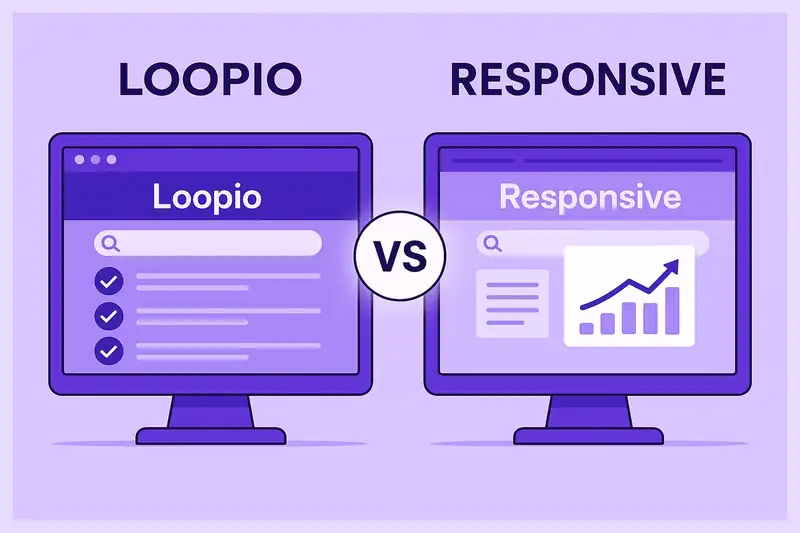
Responsive, formerly known as RFPIO, competes directly with Loopio in the enterprise RFP software market. Their pricing model follows similar patterns: custom quotes based on users, features, and contract terms. Understanding both platforms helps you negotiate effectively and make informed decisions.
Responsive pricing typically falls in similar ranges to Loopio, starting around $15,000-$25,000 annually for smaller teams and scaling significantly for enterprise deployments. Their platform emphasizes integration breadth and AI capabilities, which may be priced as core features or add-ons depending on the package.
When evaluating Responsive versus Loopio, look beyond base subscription pricing. Compare total cost including implementation, training, and ongoing support. Evaluate feature parity for capabilities you'll actually use. Consider the vendor relationship quality, support responsiveness, and product roadmap alignment with your future needs.
Key Differences: Loopio vs Responsive
Both platforms offer strong core RFP response capabilities, but they differ in approach and emphasis. Loopio tends to focus on content management excellence and user experience simplicity. Responsive emphasizes integration ecosystem breadth and enterprise scalability. Neither is universally better; the right choice depends on your priorities.
Integration capabilities vary between platforms. Evaluate which CRM, collaboration, and content management integrations matter for your workflow. Native integrations typically perform better than API-based custom builds, so prioritize platforms with strong connections to your existing tech stack.
Related: Compare RFP software features in detail
Iris: A Modern Alternative Worth Considering
While Loopio and Responsive built their platforms in the pre-AI era, Iris was designed from the ground up with AI at its core. This architectural difference translates to meaningful advantages in speed, accuracy, and ease of use. For teams evaluating RFP software in 2026, Iris represents a compelling alternative to legacy platforms.
What Sets Iris Apart
Iris uses deterministic AI trained exclusively on your internal, approved content. This means zero hallucinations and no risky web-sourced data contaminating your responses. Every answer traces back to your documentation, giving you confidence and auditability that generic AI tools can't match.
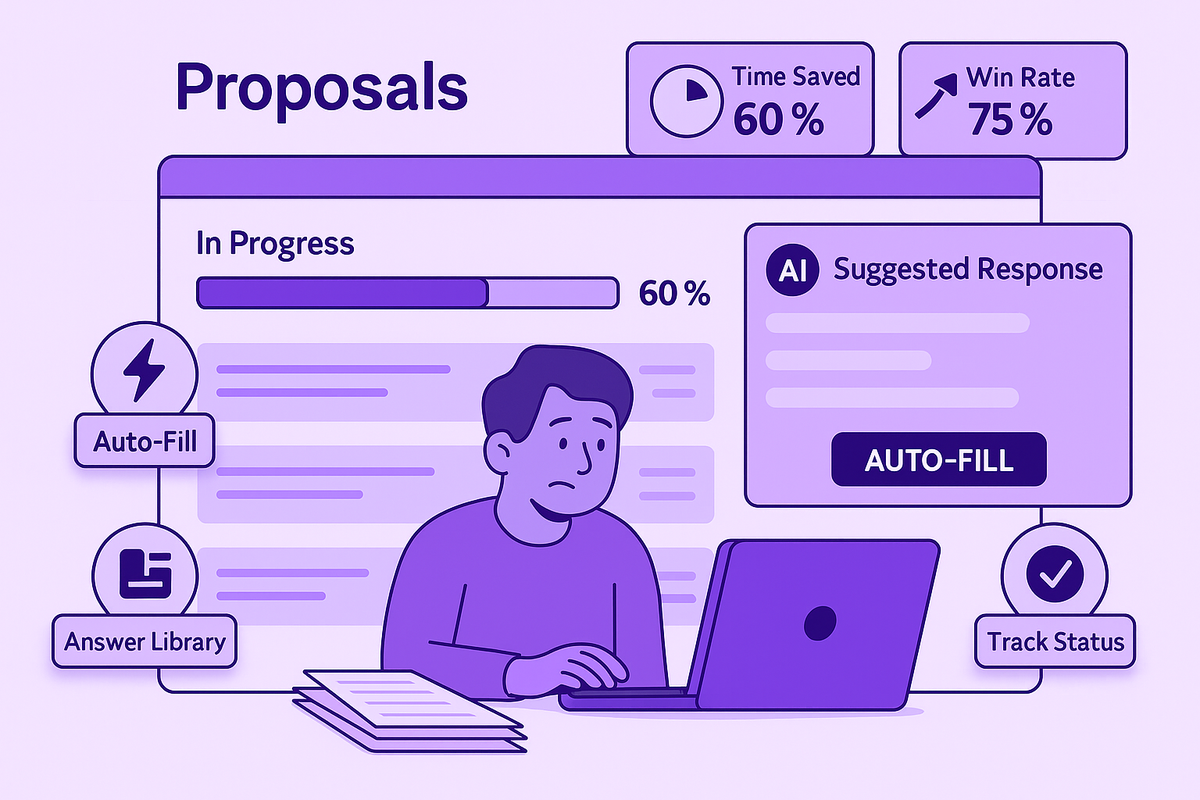
The platform delivers dramatic time savings. Teams using Iris report completing RFP responses 70% faster than with legacy tools or manual processes. That efficiency comes from intelligent question matching, AI-generated first drafts, and streamlined collaboration workflows that eliminate the typical back-and-forth bottlenecks.
Iris has earned a 4.9/5 rating on G2, with customers like MedRisk, Class Technologies, BuildOps, and Corelight praising its accuracy, speed, and responsive support team. The platform works across RFPs, security questionnaires, DDQs, and other complex document requests.
Iris Pricing Approach
Iris offers more transparent and competitive pricing than legacy platforms. While specific quotes depend on team size and requirements, Iris typically delivers comparable or better capabilities at lower total cost than Loopio or Responsive. The platform's efficiency gains also mean faster ROI, with most teams seeing payback within the first few months.
Implementation is streamlined compared to legacy platforms. Iris can ingest your existing documentation quickly, and most teams are productive within weeks rather than months. This faster time-to-value reduces both direct implementation costs and the opportunity cost of delayed productivity gains.
→ See Iris in action and get custom pricing
Head-to-Head: Loopio vs Responsive vs Iris
Here's how the three platforms compare across key evaluation criteria:
AI Capabilities
Loopio and Responsive both added AI features to their existing platforms, which can create integration seams and limitations. Iris was built AI-first, resulting in more seamless and powerful AI throughout the workflow. For teams prioritizing AI-powered efficiency, Iris offers the most advanced and reliable capabilities.
Content Management
All three platforms offer content libraries with search and organization features. Loopio has traditionally excelled here with mature tagging and versioning. Responsive offers solid content management with strong integration to external content sources. Iris combines content management with AI that proactively identifies outdated or inconsistent information, keeping your library healthier with less manual effort.
Time to Value
Legacy platforms often require 3-6 months for full implementation and team adoption. Iris typically delivers meaningful productivity gains within 2-4 weeks. For teams with immediate RFP volume or limited implementation resources, this difference significantly impacts total value delivered in the first year.
Support and Partnership
Enterprise support quality varies across all vendors. Loopio and Responsive offer tiered support with premium options at additional cost. Iris emphasizes responsive, high-touch support as a core differentiator, with customers frequently citing the team's responsiveness and partnership approach in reviews.
Related: Read Iris customer success stories
Hidden Costs to Watch For
Base subscription pricing tells only part of the story. Watch for these additional costs that can significantly increase total investment:
Implementation and Professional Services
Enterprise deployments often add $5,000-$25,000 for implementation services with legacy platforms. Understand what's included in your subscription versus what requires additional investment. Iris includes more comprehensive onboarding in base pricing, reducing surprise costs.
User Expansion Costs
Per-seat pricing can escalate quickly as your team grows. Ask about volume discounts and pricing tiers to understand scaling economics. Some vendors offer unlimited users within tiers, providing cost predictability as you expand.
Premium Support Tiers
Faster response times and dedicated support typically cost 15-25% of base subscription with legacy vendors. Evaluate whether standard support meets your needs. Iris includes responsive support in standard pricing rather than charging premium tiers for reasonable service levels.
Integration Development
Custom integrations beyond standard offerings may require professional services or higher-tier plans with API access. If you need integrations not included in standard packages, factor development costs into total investment calculations.
Related: Explore RFP platform use cases
Calculating ROI for RFP Software
Focus on return rather than just cost when evaluating RFP platforms. The right tool should deliver value exceeding its price through time savings, quality improvements, and capacity expansion.
Time Savings Calculation
If your team currently spends 25 hours per RFP and software reduces that to 8-10 hours (typical with Iris), you save 15-17 hours per RFP. Multiply by annual RFP volume and blended hourly cost to quantify savings. For a team handling 50 RFPs at $100/hour, that's $75,000-$85,000 in recovered capacity annually.
Win Rate Impact
If improved response quality increases your win rate by even 2-3 percentage points, the revenue impact is significant. On 50 opportunities with $100K average deal size, moving from 25% to 28% win rate means an additional $150K in annual revenue.
Capacity Expansion Value
If efficiency gains allow your existing team to handle 30-50% more RFPs without adding headcount, you've expanded capacity significantly. This operational leverage compounds the value of time savings and often justifies investment in tools that deliver real efficiency.
→ Get a personalized ROI analysis
Questions to Ask All Vendors
Prepare these questions when evaluating Loopio, Responsive, Iris, or other alternatives:
What's included in base pricing versus add-ons? Specifically ask about AI features, premium integrations, and advanced analytics. Get itemized pricing for everything you'll need rather than just base platform cost.
How does your AI work, and what are its limitations? Understand whether AI is trained on your content only or uses external sources. Ask about accuracy rates and how hallucinations are prevented.
What does implementation realistically look like? Clarify timeline, resource requirements from your team, and what's covered versus additional cost. Ask for references who can speak to their implementation experience.
Can we pilot the platform with real RFPs? Hands-on experience with your actual content reveals fit better than demos. The best vendors welcome pilots because their product performs in real conditions.
What are typical renewal terms? Understand price increase expectations at renewal and options for multi-year protection. Many vendors offer attractive first-year pricing that increases significantly at renewal.
Frequently Asked Questions
Why don't RFP software vendors publish pricing?
Enterprise software pricing varies significantly based on requirements, making published pricing potentially misleading. Vendors prefer consultative sales to understand your needs and provide tailored quotes. This approach also allows negotiation flexibility that benefits prepared buyers who understand the market.
How much should we budget for RFP software?
Small teams (under 10 users) typically spend $15,000-$40,000 annually. Mid-size teams budget $40,000-$80,000. Enterprise deployments can exceed $100,000 with legacy platforms. Newer platforms like Iris often deliver enterprise capabilities at mid-market pricing. Include implementation costs in your initial budget planning.
Is Loopio, Responsive, or Iris better?
The best choice depends on your specific needs. Loopio and Responsive offer mature platforms with extensive integration ecosystems. Iris offers superior AI capabilities, faster implementation, and often better pricing. Evaluate all three against your requirements, conduct hands-on trials, and talk to references from similar organizations.
Can we negotiate RFP software pricing?
Yes, enterprise software pricing is typically negotiable. Multi-year commitments, timing (end of quarter/year), competitive quotes, and larger deals all provide leverage. Prepared buyers who understand market pricing often secure 15-25% better terms than those who accept initial offers.
How long does implementation take?
Legacy platforms like Loopio and Responsive often require 3-6 months for full implementation. Iris typically achieves productive use within 2-4 weeks due to its modern architecture and AI-powered content ingestion. Factor implementation timeline into your total cost and value calculations.
What if we're already using Loopio or Responsive?
Migration between platforms is common and manageable. Most content can be exported and imported, and vendors like Iris offer migration support to ease the transition. If your current platform isn't delivering expected value, switching costs are often lower than the ongoing cost of staying with a poor-fit solution.
Making Your Decision
Choosing RFP software is a significant decision affecting your team's productivity and deal outcomes. The market has evolved significantly, and platforms built in the AI era offer meaningful advantages over legacy tools. Take time to evaluate options thoroughly, including newer entrants that may better fit modern requirements.
Don't let incumbent bias or switching cost fears prevent you from finding the best solution. A platform that delivers 70% time savings and higher win rates quickly justifies any transition effort. Focus on total value including capabilities, ease of use, support quality, and long-term partnership potential.
Request trials or pilots before committing. Hands-on experience with your actual content reveals fit better than demos and sales presentations. The vendors confident in their product will welcome the opportunity to prove their value with real work.
→ See why teams are choosing Iris over legacy platforms
Related: Read customer success stories
Share this post
Link copied!