RFI Guide: What It Is & How to Respond Fast
October 2, 2025
By
Evie Secilmis
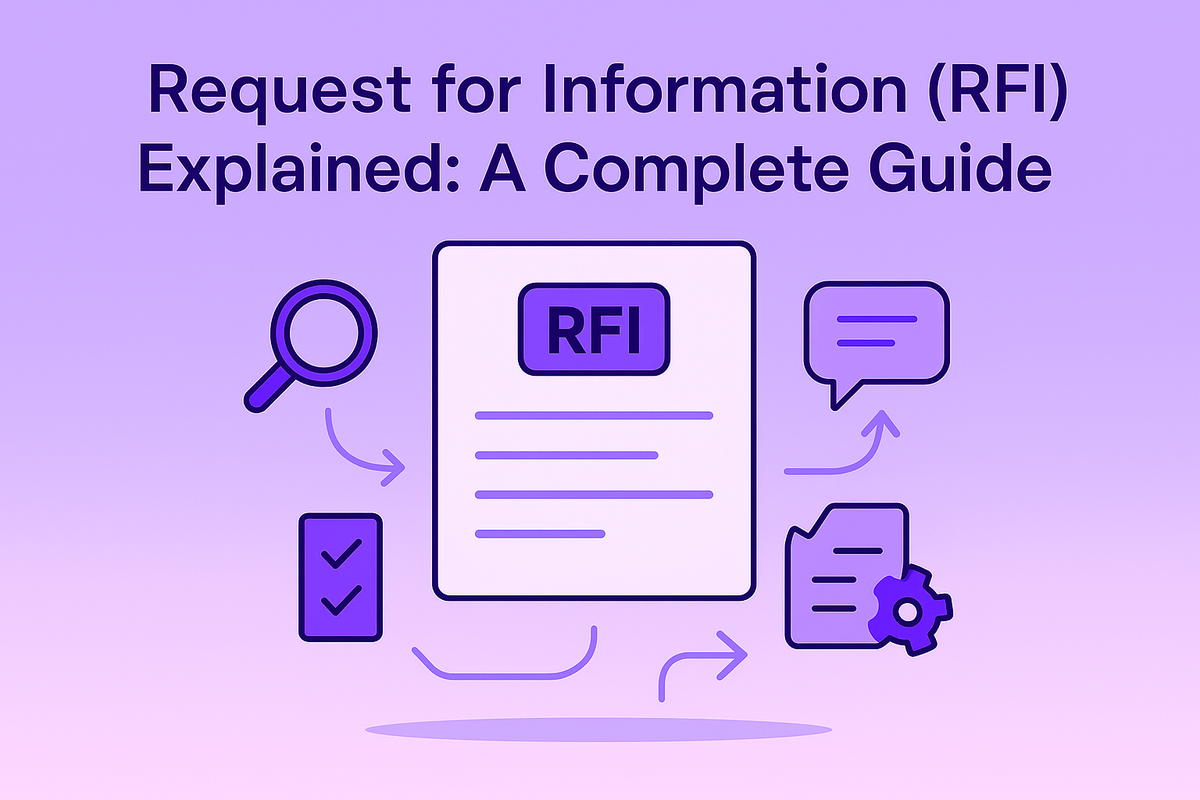

Before you build a house, you do your homework. You check out different architects and gather ideas to see what's possible. The business world has a formal process for this exact kind of research: the Request for Information (RFI). This isn't about getting quotes yet—it's about smart exploration. An RFI helps you understand the market, learn from experts, and figure out the right rfi questions to ask vendors. This guide gets the whole RFI explained, showing you how to use this tool to lay a solid foundation for your next big project.
Key Takeaways
- Treat the RFI as your market research phase: Use it to understand the landscape of potential solutions and identify qualified vendors before you’re ready to ask for detailed proposals or pricing.
- Ask clear questions to get clear answers: Structure your RFI with specific requirements and a standard format to make vendor responses easy to compare and ensure you gather the exact information you need.
- Establish a consistent evaluation process from the start: Create a scoring system and a central platform for managing submissions to keep your team aligned, ensure a fair review, and make your final decision with confidence.
What is a Request for Information (RFI)?
Think of a Request for Information (RFI) as the initial research phase before a big project. It’s a formal document a company sends out to gather general information from potential suppliers about their products or services. The goal isn't to get a price quote or a detailed proposal just yet; it's about exploring the market to see who’s out there and what solutions are available.
An RFI is often the first step in a longer procurement process. It helps you cast a wide net and learn about different vendors' capabilities, strategies, and offerings. After you’ve reviewed the RFI responses, you’ll have a much clearer picture of the market. This helps you create a shortlist of qualified vendors to invite to the next stage, which is typically a Request for Proposal (RFP) or a Request for Quotation (RFQ). It’s all about gathering knowledge so you can make a more informed decision down the line.
What's the Real Goal of an RFI?
The main goal of an RFI is to educate your team and understand the landscape of potential solutions. It’s a low-pressure way to collect information in an organized format, making it easier to compare different vendors apples-to-apples. By issuing an RFI, you can quickly get a sense of the available technology, vendor qualifications, and general market pricing without committing to a formal procurement cycle. This initial market analysis is incredibly valuable because it helps you refine your project requirements and identify the key players who can actually meet your needs, saving you a ton of time later on.
When Should You Use an RFI?
You should use an RFI when you have a clear problem but aren't yet sure about the best solution. It’s the perfect tool for the early stages of a project, especially if the solution you need is complex or if you’re unfamiliar with the market. For example, if you’re looking to implement a new ERP software system or hire a marketing agency for a new campaign, an RFI can help you understand the different approaches and technologies available. It’s most useful when you need to gather preliminary information before you’re ready to evaluate specific proposals or price points.
What an RFI Is Not
It’s easy to mistake an RFI for a catch-all communication tool, but it has a very specific job. An RFI is not the place for everyday project conversations, submitting formal safety plans, or making last-minute schedule changes. It’s a structured inquiry, not a suggestion box or a direct line for project management. According to construction software company Procore, it shouldn't replace direct conversations but rather formalize the information-gathering stage. Think of it this way: an RFI is designed to collect data before a decision is made. It is not a tool for asking for contract changes or getting approvals on work that’s already in progress. Keeping the RFI focused on its intended purpose ensures the process stays clean and effective for everyone involved.
How Different Industries Use RFIs
While the fundamental goal of an RFI—gathering information—is universal, its application can look quite different depending on the industry. The questions asked, the information sought, and the context of the request all shift based on the specific needs of the sector. Seeing how various fields use RFIs can help you understand their flexibility and power, whether you're the one issuing the document or the one responding. From building skyscrapers to launching ad campaigns, the RFI is a foundational tool for making smarter, more informed business decisions.
Construction
In the construction world, projects live and die by the details in their blueprints. An RFI is used when those details are missing or unclear. For example, if a project plan doesn't specify the type of material to be used for a particular fixture, the main contractor will issue an RFI to the architect or client for clarification. This formal process creates a paper trail, ensuring that the right information is documented and that work can proceed accurately without costly delays or rework. It’s a critical tool for maintaining clarity and alignment on a busy job site.
Information Technology (IT)
When a company decides to invest in a major piece of software, like a new customer relationship management (CRM) system, the stakes are high. An RFI is often the first step in this complex procurement process. The document will outline the company's business needs, asking potential vendors to explain how their software can meet those requirements, especially concerning how it will integrate with existing systems. This allows the company to survey the technological landscape and understand the different solutions available before committing to a more detailed evaluation.
Advertising
Choosing an ad agency is about finding the right creative and strategic partner. Before a company invites agencies to pitch creative ideas, it often uses an RFI to handle the initial vetting. The RFI will ask for practical information like an agency's current client list (to check for conflicts of interest), case studies of past work, and an overview of their core strengths and capabilities. This helps the company create a shortlist of qualified agencies that are a good fit from a business perspective, saving everyone time before the more creative and intensive RFP stage begins.
The Government's FOIA Process
It's important not to confuse a business RFI with a government request like the Freedom of Information Act (FOIA). While both involve asking for information, their purpose and process are entirely different. A business RFI is part of a commercial procurement cycle, used by a company to evaluate potential suppliers. In contrast, a FOIA request is a legal process that allows the public to request access to records from any federal agency. It’s a tool for transparency and public accountability, not for buying goods or services.
Open vs. Closed RFIs
RFIs generally come in two flavors: open or closed. An open RFI is like a public casting call—it’s posted publicly, and any interested vendor can submit a response. This approach is great when you want to cast a wide net to discover new or unknown suppliers. A closed RFI, on the other hand, is like a private audition. It’s sent by invitation only to a pre-selected list of vendors that the company has already identified as potential candidates. For sales teams, receiving a closed RFI is a strong signal that you're already on the buyer's radar. In either case, having a streamlined process to manage and respond to these requests is crucial. Tools that help you quickly generate accurate, high-quality proposals ensure you can put your best foot forward every time.
Who Should Be on Your RFI Team?
The RFI process typically involves a few key groups. On the buyer's side, you’ll have the procurement team managing the process, along with project managers and subject matter experts who can help define the requirements and evaluate the responses. On the seller's side, sales and proposal teams are responsible for crafting a compelling response that showcases their company's expertise. To make the evaluation fair and simple, buyers usually ask vendors to respond in a standard format. Engaging multiple stakeholders ensures the information you gather is comprehensive and truly meets the organization's needs.
The Benefits of a Well-Crafted RFI
When done right, an RFI is more than just a document—it's a strategic tool that sets the stage for a successful project. It’s your first, best chance to survey the market, align your internal team, and ensure you’re starting your procurement journey on solid ground. A thoughtful RFI process doesn't just gather information; it builds a foundation of clarity and confidence that pays dividends throughout the entire project lifecycle. By investing a little time upfront to craft a clear and comprehensive RFI, you save yourself from major headaches, wasted resources, and costly missteps down the road. It’s about working smarter, not harder, from day one.
Saves Time and Money
A well-crafted RFI acts as a powerful filter, saving you from drowning in irrelevant proposals later on. Instead of jumping straight to time-consuming demos and meetings, an RFI helps you quickly gather information from a wide range of suppliers to see who can genuinely meet your needs. This pre-qualification step is crucial. It allows you to weed out vendors who aren't a good fit early in the process, so your team can focus its energy on the most promising candidates. This efficiency prevents you from wasting valuable time and resources evaluating solutions that were never going to work in the first place.
Organizes the Procurement Process
One of the biggest benefits of an RFI is the structure it brings to an otherwise chaotic process. Crafting the document forces your team to sit down and clearly define the project's background and your specific requirements. By asking every vendor to respond to the same set of questions in a standardized format, you make the evaluation process incredibly straightforward. You can easily compare capabilities, experience, and potential solutions side-by-side, creating an apples-to-apples comparison that removes guesswork and aligns all stakeholders around a clear set of criteria for making the final decision.
Encourages Fair Competition
A transparent RFI process levels the playing field for all potential vendors. When you provide the same information and ask the same questions of everyone, you create a fair and objective environment where the best solution can win on its own merits. This clear method for collecting and comparing information ensures that every supplier has an equal opportunity to showcase their strengths. It helps you avoid unconscious bias and make a decision based on data and qualifications, not just on a pre-existing relationship or a flashy sales pitch, leading to a better outcome for your project.
The Hidden Costs of a Poor RFI Process
While a good RFI process can set you up for success, a poorly managed one can quickly become a significant liability. When RFIs are vague, disorganized, or poorly tracked, they create confusion and delays that ripple through the entire project. These issues aren't just minor annoyances; they come with real, tangible costs that can impact your budget, timeline, and even the final quality of your project. Understanding these hidden costs is the first step toward avoiding them and ensuring your procurement process is an asset, not a drain on your resources.
Financial Drain on Projects
A messy RFI process can quietly bleed your project budget dry. Vague questions lead to incomplete answers, which then require endless follow-up emails and clarification meetings—all of which cost time and money. According to research from Procore, these inefficiencies add up fast, with some projects accumulating as much as $100,000 in extra costs for every $5 million spent. These expenses come from delays, rework, and the administrative burden of managing a confusing process, turning what should be a simple information-gathering step into a significant financial drain.
The Problem of Unanswered RFIs
What’s worse than a vague RFI? One that gets no response at all. Shockingly, nearly one in four RFIs never receives an answer. When potential vendors see a disorganized or overly complex RFI, they may decide it’s not worth their time to respond, causing you to miss out on innovative solutions. For sales teams, crafting a detailed response that goes into a black hole is a massive waste of resources. Using a centralized AI deal desk to manage these documents ensures that every submission is tracked and every vendor gets a fair look, preventing valuable opportunities from falling through the cracks.
What to Include in Your Request for Information
Think of your RFI as a conversation starter. To get the best answers, you need to ask the right questions in the right way. A well-structured RFI not only makes it easier for vendors to respond but also simplifies your evaluation process down the line. It’s all about setting clear expectations from the get-go. When you break it down, a strong RFI has a few key components that work together to gather the exact information you need to make an informed decision.
A thoughtfully constructed RFI shows potential partners that you’re organized and serious about your project, which encourages them to provide equally thoughtful responses. It acts as a filter, helping you quickly identify the most promising vendors while weeding out those who aren't a good fit. This saves everyone time and helps you build a strong foundation for future vendor relationships. Let’s walk through the essential parts of an RFI and why each one is so important for a successful outcome.
Set the Stage with a Project Overview
Before you ask vendors about themselves, tell them a little about you. A strong RFI always begins with a project overview that gives vendors context. Share a brief background on your company, what your team does, and the challenge you’re trying to solve. Explain the project's goals and what you hope to achieve. This introduction helps vendors understand your needs and decide if their solutions are a good fit. When vendors have a clear picture of your objectives, they can provide more relevant and insightful information, saving you from sifting through generic sales pitches.
Ask the Right Questions
This is the heart of your RFI. Be direct and specific about the information you’re looking for. Vague questions lead to vague answers, so avoid open-ended prompts like "Tell us about your services." Instead, ask targeted questions that address your specific needs. For example, you might ask about a vendor's experience in your industry, their company size and stability, or the technical capabilities of their product. The more detailed your questions are, the more detailed and useful the responses will be. This clarity is crucial for an effective requirements gathering process.
Tell Vendors How to Respond
To make comparing vendor responses easier, provide clear instructions on how you want them to format their submissions. Specify things like page limits, font size, and file type (e.g., PDF). You might even provide a template for vendors to fill out. This standardization is a game-changer during the evaluation stage. Instead of trying to compare apples to oranges, you’ll have all the information organized in a consistent way. Also, be sure to include a firm deadline for submissions, including the specific time and time zone, so there’s no room for confusion.
Share Your Evaluation Criteria
Transparency builds trust. Briefly explain the criteria you’ll use to evaluate the RFI responses. You don’t need to share your entire scoring system, but letting vendors know what you value most helps them focus their answers. For example, you might mention that you’re prioritizing vendors with proven experience in a certain industry or those with specific security certifications. This helps vendors highlight their most relevant qualifications and shows that you have a fair and structured procurement process. It sets a professional tone and encourages higher-quality submissions.
Make It Easy for Vendors to Submit
Finally, make it incredibly easy for vendors to ask questions and submit their final responses. Designate a single point of contact for all communications to keep things organized and prevent conflicting information. Clearly state their name, title, and email address. You should also specify exactly how submissions should be delivered—whether it’s via email to a specific address or through an online portal. Double-check that all your instructions are simple and straightforward. The goal is to remove any friction that might prevent a great potential partner from responding.
RFI vs. RFP vs. RFQ: What's the Difference?
If you’re in sales, you’ve likely seen the acronyms RFI, RFP, and RFQ pop up in your inbox. While they might seem interchangeable, they each represent a distinct stage in a company's buying process. Think of them as a sequence: a company starts broad, gathers information, narrows down its options, and then finally looks at pricing. Understanding where your potential customer is in this journey is key to crafting a response that actually meets their needs.
An RFI (Request for Information) is the starting point. The buyer is doing their homework, trying to understand the market and see who the key players are. Next comes the RFP (Request for Proposal), where they ask for a detailed plan on how you’ll solve their specific problem. Finally, an RFQ (Request for Quotation) is all about the numbers—they know what they want and are now focused on price. Responding to an RFP with a simple price list, or an RFI with a full-blown proposal, can be a waste of everyone’s time. Knowing the difference helps you focus your energy where it counts and build a stronger sales cycle.
Understanding the Request for Proposal (RFP)?
A Request for Proposal, or RFP, is where things get serious. It’s a formal document a company sends out when it has a clearly defined problem but is looking for a specific solution. Unlike an RFI, which is for gathering general information, an RFP asks vendors to submit a detailed proposal outlining how their product or service will meet the company’s needs. This includes specifics on implementation, timelines, features, and the team involved. Responding to an RFP is a significant undertaking, requiring a deep understanding of the client's challenges. This is where having an AI deal desk becomes invaluable, helping you generate accurate, high-quality proposals without spending weeks on a first draft.
Understanding the Request for Quotation (RFQ)
A Request for Quotation (RFQ) is the most straightforward of the three. It’s sent when a company knows exactly what it wants to buy and is primarily focused on getting the best price. The decision-making process here is less about the solution and more about the bottom line. For example, a company might send an RFQ for a specific number of laptops with exact specifications. The responses are typically itemized price lists. There’s very little room for creative problem-solving in an RFQ response; it’s all about providing a competitive quote for a pre-defined product or service.
RFI, RFP, or RFQ: Which One Do You Need?
For buyers, choosing the right document sets the stage for the entire procurement process. If you’re just starting to explore a new project and don’t know what solutions are available, an RFI is your best bet. It helps you survey the landscape and identify potential partners. Once you’ve done your initial research and have a shortlist of vendors, an RFP is the next logical step to get detailed, comparable solutions. Finally, if you’ve already decided on the exact product or service and just need to compare costs from a few select vendors, an RFQ is the way to go. This structured procurement process ensures you get the right information at the right time.
How to Write an RFI That Gets Results
Crafting an RFI that brings back valuable, decision-driving information is an art. When you send out a vague or overly complicated request, you get vague and complicated answers in return. The key is to be intentional. A great RFI is clear, focused, and respectful of the vendor's time, which in turn encourages them to provide a thoughtful and thorough response. Think of it as the first step in building a potential partnership—you want to start on the right foot.
The goal isn't just to collect a stack of brochures and pricing sheets. It's to gather specific insights that help you understand the market, compare potential solutions, and narrow down your options before you move to a more formal RFP. By putting in the effort upfront to create a well-structured document, you streamline the entire procurement process for your team and for the vendors you engage. Let’s walk through the essential steps to create an RFI that truly delivers the results you need to make a confident, informed decision.
Start with Your End Goal in Mind
Before you write a single word of your RFI, pause and ask your team: "What do we actually need to learn?" Your primary goal is to understand how different vendors can meet your company's specific needs, especially the ones that are unique to your situation. Get your key stakeholders in a room (or on a call) and map out your core challenges and desired outcomes. Are you trying to solve a specific operational bottleneck? Looking for a tool that integrates with your existing tech stack?
Answering these questions first will give you a clear direction. Every question in your RFI should tie back to one of these core objectives. This focus prevents you from asking generic questions that yield generic answers and ensures you get the targeted information you need to properly vet potential partners.
Write Requirements Everyone Can Understand
Clarity is your best friend when writing an RFI. Vendors are busy, and a document that’s easy to read and understand is more likely to get a high-quality response. Keep your RFI focused and to the point. A typical RFI is only a few pages long and should be structured logically. Start with a brief overview of your company and the project, then clearly outline the specific information you’re requesting.
Break your questions into organized sections, like Company Background, Technical Capabilities, and Implementation Process. Use simple language and avoid internal jargon that vendors might not understand. Providing a clear structure makes it easier for vendors to prepare their responses and for your team to evaluate them consistently later on.
Set a Realistic Timeline
A well-defined timeline sets clear expectations for everyone involved and keeps your project on track. Rushing vendors will only lead to rushed, incomplete responses. Give them a reasonable amount of time—typically two to four weeks—to prepare a thoughtful submission. Your timeline should be clearly stated in the RFI and include key dates.
Be sure to map out the entire schedule, including:
- The date the RFI is issued
- A deadline for vendors to submit clarifying questions
- The final submission deadline
- Your internal review period
- The date you expect to notify vendors of the next steps
This transparency shows that you have a structured process and respect the effort vendors put into their responses.
How Will You Send Out Your RFI?
How will you get your RFI to potential vendors and how will you receive their responses? While you can always send it as a simple email attachment, this can quickly become difficult to manage, especially if you’re expecting a high volume of submissions. Juggling different file versions and follow-up emails can lead to confusion and lost information.
Consider using a centralized system or portal to distribute the RFI and collect responses. This ensures all communication and documentation is stored in one place, making it easier to track submissions and keep everything organized. A streamlined deal desk solution can simplify this process, providing a single source of truth for your team and potential vendors.
Keep Your Team in the Loop
The RFI process is a team sport. Your project will likely impact multiple departments, from IT and finance to legal and operations. Involving these stakeholders from the beginning is crucial for success. Their input will ensure your RFI covers all the necessary requirements and that you’re asking the right questions to evaluate vendors from every important angle.
Using collaborative tools helps your team work together to review submissions and make informed decisions. When everyone is aligned and has access to the same information, you can avoid internal bottlenecks and move through the evaluation phase more efficiently. This collaborative approach ensures the solution you ultimately choose has buy-in from the entire organization.
How Vendors Respond to RFIs
On the other side of the table, receiving an RFI is both an opportunity and a challenge. It’s a chance to get on a potential client's shortlist, but it also demands time and resources to create a thoughtful response. The most successful sales teams don’t treat each RFI as a brand-new project. Instead, they have a streamlined, repeatable process that allows them to respond quickly and effectively without sacrificing quality. They rely on smart systems and organized content to do the heavy lifting, freeing them up to focus on tailoring their response to the specific needs of the buyer.
Leveraging Response Management Software
Top-performing teams use response management software to handle the entire lifecycle of an RFI. These platforms act as a central hub, bringing together all the necessary information and team members into one collaborative workspace. Instead of digging through old emails or shared drives for answers, the software can automatically pull approved content to generate a first draft in minutes. This automation is a game-changer, allowing teams to manage multiple responses simultaneously and ensure every submission is accurate and polished. By streamlining the administrative work, sales teams can spend their valuable time personalizing the response and highlighting what makes their solution the perfect fit.
The Importance of a Knowledge Library
The engine behind any great response management process is a well-maintained knowledge library. This is your company's single source of truth—a centralized repository containing all your best, most up-to-date answers, case studies, security information, and company details. When an RFI comes in, you’re not starting from scratch; you’re pulling from a library of pre-approved, high-quality content. This not only ensures consistency across all your proposals but also dramatically speeds up your response time. An AI-powered platform like Iris takes this a step further by helping you maintain that library, proactively identifying outdated information to make sure your team is always working with the most current and accurate content.
Common RFI Problems (and How to Solve Them)
The RFI process is a fantastic tool for gathering information, but let’s be real—it’s not always a walk in the park. From getting buried in documents to chasing down vendors, a few common challenges can pop up and slow you down. But don't worry, these hurdles are completely manageable with a bit of foresight and the right strategy. By anticipating these potential bumps in the road, you can create a smoother, more efficient process for your team and the vendors you’re evaluating. Let’s break down some of the most frequent challenges and how you can handle them like a pro.
Feeling Overwhelmed by Responses?
When you send out an RFI, you’re asking for a lot of information, and vendors will deliver. The challenge is sifting through the resulting mountain of data without getting overwhelmed. Analyzing every detail is crucial for making an informed decision, but it’s tough when each response is formatted differently.
To make your life easier, create a standardized response template for vendors to follow. This ensures you can compare apples to apples when evaluating submissions. It’s also helpful to establish your evaluation criteria before you receive any responses. Knowing exactly what you’re looking for will help you focus on the information that matters most and quickly identify the top contenders.
Are Your Requirements Too Vague?
If your RFI questions are ambiguous, you’ll get ambiguous answers. Vague requirements lead to a wide range of interpretations, making it nearly impossible to compare vendor responses effectively. This wastes time for both you and the vendors, who are trying their best to give you what you need. The key is to be crystal clear and specific about the information you’re looking for.
Before sending your RFI, have a colleague from another department read it over. If they can’t understand what you’re asking for, your vendors won’t be able to either. Avoid internal jargon and spell out any acronyms. Providing a concise overview of your project and its goals will also give vendors the context they need to provide relevant, high-quality information.
Juggling Too Many Vendor Responses?
Keeping track of submissions, questions, and follow-ups from multiple vendors can quickly become a logistical nightmare. Important details can get lost in overflowing inboxes, and it’s easy to lose track of which vendor said what. A disorganized process not only creates extra work for your team but also looks unprofessional to potential partners. A well-structured RFI response helps your team compare vendors efficiently, saving time for everyone involved.
The best way to manage this is by using a central platform to handle all RFI-related communications and documents. An AI deal desk solution can act as your single source of truth, keeping everything organized and accessible. This approach ensures every stakeholder has access to the same information and that no response gets overlooked.
Is Your Timeline Slipping?
The RFI process is meant to be quicker than an RFP, but delays can still happen. Waiting on late submissions or taking too long to review responses can throw your entire project timeline off track. Sticking to a schedule is essential for maintaining momentum and showing vendors that you respect their time as much as your own.
Set a clear and realistic timeline from the very beginning, and communicate it to all participating vendors. Include deadlines for submitting questions as well as the final response. It’s also a good idea to build in a small buffer for unexpected issues. Using a tool that automates reminders and notifications can help keep everyone on track without you having to play the role of project manager.
Struggling with Vendor Communication?
Clear and consistent communication is the backbone of a successful RFI process. When vendors have questions, they need a straightforward way to get answers. If they receive conflicting information from different team members, it creates confusion and frustration. This can damage your company’s reputation and may even cause top-tier vendors to withdraw from the process.
Establish a single point of contact for all RFI-related inquiries to ensure consistency. When a question comes in, share the answer with all participating vendors to maintain a level playing field. This transparency builds trust and helps you get better, more informed responses. Using collaborative tools can also streamline this process, making it easy to share updates and manage Q&A in one central place.
Best Practices for a Smoother RFI Process
Running an RFI process can feel like herding cats, with documents, questions, and deadlines flying in every direction. But it doesn't have to be chaotic. By putting a few key practices in place, you can transform your RFI process from a stressful scramble into a well-oiled machine that consistently delivers valuable insights. A thoughtful approach not only saves you time and headaches but also helps you gather higher-quality information from potential vendors, setting the stage for a successful project before it even begins.
Think of these best practices as your playbook for success. They’re designed to bring clarity, consistency, and efficiency to every stage, from drafting your initial questions to evaluating the final submissions. When you create a structured and transparent process, you make it easier for vendors to give you their best responses and for your team to make smart, informed decisions. It’s about working smarter, not harder, and building a system that supports your team instead of bogging it down. Let’s walk through five simple habits that can make your next RFI process your smoothest one yet.
Create a Standard RFI Template
Creating a repeatable RFI process is one of the best things you can do for your team. When you standardize your approach, you stop reinventing the wheel every time a new project comes up. Start by developing a go-to RFI template with clear guidelines and a core set of questions. This ensures you’re collecting consistent information from every vendor, which makes side-by-side comparisons much easier. A standardized process also helps vendors understand exactly what you need, leading to more relevant and helpful responses. It’s a simple change that brings much-needed predictability and efficiency to your procurement strategy.
Use Technology to Your Advantage
Manually tracking RFI submissions and stakeholder feedback in spreadsheets is a recipe for confusion and errors. The right technology can completely change the game by providing a central hub for all RFI-related activities. Using an AI deal desk solution allows you to create, distribute, and manage your RFIs from a single platform. These tools streamline communication, automate reminders, and keep an organized record of every interaction. This not only saves your team a ton of administrative work but also ensures everyone is working with the most up-to-date information, making collaboration seamless and effective.
Build in Quality Control Checkpoints
The information you gather from an RFI is only as good as its accuracy. That’s why building quality control checks into your process is so important. Before you even send the RFI, have a colleague review it for clarity and completeness. Once responses start coming in, designate a point person to perform an initial review to ensure they meet your basic requirements. Analyzing RFI responses carefully is a critical step that helps you spot potential red flags and avoid costly mistakes down the road. This extra layer of review ensures you’re making decisions based on solid, reliable data.
Keep Communication with Vendors Open and Clear
Clear and consistent communication is the foundation of a strong vendor relationship. From the moment you issue the RFI, be transparent about your timeline, evaluation criteria, and how you’ll handle questions. Set up a clear channel for vendors to ask for clarification, and be prompt with your replies. Keeping vendors informed, even if it’s just a quick update that you’re still reviewing submissions, shows respect for their time and effort. This open dialogue not only encourages better responses but also helps you build a reputation as a great company to work with.
Document Everything
Documenting your RFI process might feel like extra work, but it pays off in the long run. Keep detailed records of everything, including the final RFI document, all vendor correspondence, your team’s evaluation notes, and the final decision. This information creates a clear audit trail and protects your organization if any questions arise later. More importantly, these records become an invaluable internal resource. By reviewing past RFIs, you can identify what worked well and what didn’t, allowing you to continuously refine your process and make each RFI more effective than the last.
Focus on Capabilities, Not Pricing
It can be tempting to ask about pricing right away, but the RFI stage isn't the time for it. The real purpose of an RFI is to educate your team and explore the landscape of potential solutions. Think of it as a fact-finding mission, not a price negotiation. By focusing on a vendor's capabilities, experience, and approach, you can gather the information you need to make an apples-to-apples comparison based on value. This low-pressure approach allows you to evaluate potential partners on their ability to solve your problem, not just on their price tag. You’ll have plenty of time to dig into costs later during the RFP or RFQ stage, once you have a clearer understanding of who can actually deliver what you need.
Suggest Potential Solutions
To get more insightful answers, try guiding the conversation. Instead of asking a broad, open-ended question, suggest a potential solution to frame the discussion. For example, rather than asking, "How would you improve our data workflow?" you could ask, "We're considering implementing an automated data validation tool to improve our workflow. What are the pros and cons of this approach, and what alternatives would you suggest?" This technique shows vendors you’ve already put some thought into the problem and encourages them to provide a more consultative response. It shifts the dynamic from a simple Q&A to a collaborative brainstorming session, helping you uncover more creative and effective solutions.
Use Visuals to Add Clarity
When a problem is complex, words alone can fall short. Including visuals in your RFI is a simple but powerful way to bridge the communication gap. A well-placed screenshot, workflow diagram, or even a short video can explain a technical challenge or a convoluted process much more effectively than paragraphs of text. Visuals help vendors quickly and clearly understand your needs, reducing the risk of misinterpretation. This clarity ensures the responses you receive are more accurate and relevant to your actual problem, saving everyone time and preventing confusion down the line. It’s a small step that can make a huge difference in the quality of the information you gather.
Choosing the Right Tools for Your RFI Process
Managing the RFI process with spreadsheets and email chains is a recipe for chaos. The right technology not only brings order to the process but also gives your team a serious competitive edge. Instead of getting bogged down by administrative work, you can focus on what really matters: finding the best partners for your project.
Find Tools That Automate Repetitive Tasks
Think about all the time your team spends on manual, repetitive work—sending reminders, tracking down responses, and compiling information. This is where AI-powered RFI software can completely change the game. It automates these tedious processes, freeing up your team to handle more strategic work. By letting technology manage the busywork, you reduce the risk of human error, speed up your timeline, and cut down on unnecessary costs. It’s about working smarter, not harder.
Choose a Central Hub for Collaboration
When everyone works from a different document version, confusion is inevitable. A centralized platform acts as the single source of truth for your entire RFI process. It ensures all team members, from procurement to legal, are on the same page. This collaborative space is where you can create, track, and manage RFIs in one place. It eliminates version control nightmares and makes it easy for stakeholders to contribute their expertise, ensuring your questions are clear and your evaluations are consistent.
Look for Built-in Analytics and Tracking
How do you know if your RFI process is actually effective? Without data, you’re just guessing. The right tools come with built-in analytics that let you track key metrics like response times, vendor engagement, and internal bottlenecks. This information is invaluable for refining your approach over time. By analyzing this data, you can spot trends, identify areas for improvement, and make more informed decisions that ultimately improve your win rates and strengthen your procurement strategy.
Prioritize Tools That Integrate Easily
Your RFI software shouldn’t operate in a silo. To be truly effective, it needs to integrate with the other tools your team relies on, like your CRM and content libraries. A seamless, integrated response management system ensures that information flows smoothly between platforms. This prevents duplicate data entry and makes it easier to access accurate, up-to-date information. The best tools can even proactively identify outdated content across your connected systems, ensuring every RFI response is built on solid ground.
How to Fairly Evaluate RFI Responses
Once you’ve sent out your RFI, the responses will start coming in. This is where the real work begins. Sifting through pages of information from multiple vendors can feel overwhelming, but a structured evaluation process will help you identify the best potential partners without getting lost in the details.
The goal is to create a fair, consistent, and transparent system for assessing each submission. This not only helps you make a better, more informed decision but also protects your team from potential bias. By defining your evaluation method before you open the first document, you ensure that every vendor is measured against the same yardstick. A methodical approach turns a mountain of data into a clear path forward, allowing you to confidently select the right vendors for the next stage of your procurement process.
It transforms a subjective task into an objective analysis, giving you a solid foundation for your final decision and making it easier to justify your choices to leadership and other stakeholders. This structured approach also shows respect for the time and effort vendors put into their responses, helping you build a reputation as a fair and professional partner. Without a plan, it's easy to get sidetracked by flashy presentations or to let personal preferences influence the outcome. A clear evaluation process keeps everyone on the same page and focused on the core requirements of the project.
Create One Place to Collect All Responses
A fair evaluation starts long before you read the first proposal. It begins with how you structure your RFI and collect the submissions. Your RFI should include clear questions and formatting guidelines that encourage vendors to provide information in a consistent way. This makes it much easier to compare their answers side-by-side.
To keep things organized, require all vendors to submit their responses through a single portal or dedicated email address. This prevents documents from getting lost in different inboxes and ensures every submission is logged with a clear timestamp. When all the information is in one place and in a similar format, your team can spend less time organizing and more time on meaningful analysis.
Build a Consistent Evaluation Framework
Before you review any submissions, your team needs to agree on a consistent evaluation framework. This is essentially a list of the key criteria you’ll use to judge each response. Your framework should directly reflect the goals and requirements you outlined in your RFI. Common criteria include technical capabilities, industry experience, company stability, and alignment with your project’s objectives.
Establishing this framework beforehand is critical for an objective review. It prevents the team from being swayed by a particularly well-designed document or a single compelling feature, ensuring you focus on the factors that truly matter. A solid framework provides a structured approach to vendor selection and helps you make a decision that is both defensible and aligned with your business needs.
Use a Simple Scoring System
Once you have your framework, the next step is to turn it into a simple scoring system. This adds a quantitative layer to your evaluation, making it easier to compare vendors objectively. For each criterion in your framework, assign a scoring scale, such as 1 to 5, where 1 is "Does not meet requirements" and 5 is "Exceeds requirements."
You can also apply weights to your criteria. For example, if technical expertise is more critical than the vendor’s company size, you might give it a higher weight in the final calculation. This system creates a clear, data-driven way to rank responses and quickly identify the top contenders. It also provides a straightforward way to justify your decisions to stakeholders and other team members.
Decide on Your Follow-Up Process
No matter how clear your RFI is, you’ll likely have questions after reviewing the responses. Some information might be ambiguous, or a vendor may have misinterpreted a question. That’s why it’s important to establish a clear and fair procedure for follow-ups. Decide ahead of time how you will handle requests for clarification.
Will you send a list of questions via email? Will you schedule brief calls? Whatever you choose, apply the same process to every vendor to give them an equal opportunity to clarify their submission. This not only helps you get the information you need but also fosters a positive relationship with potential partners by demonstrating that your process is professional and transparent.
What to Do After the RFI is Complete
You’ve sent out your RFI, the responses have rolled in, and your inbox is full. So, what’s next? The period after the submission deadline is just as critical as the preparation phase. This is where you turn all that collected data into a clear, strategic decision for your project. It’s about more than just picking a winner; it’s about analyzing the information, defining your next move, and building relationships that could benefit your organization for years to come. Let’s walk through the three key steps to take once the RFI process is complete.
Use the Data to Inform Your Decision
Once you have all the responses, it’s time to put on your analyst hat. A thorough review is essential for making an informed choice and avoiding costly missteps down the line. Start by organizing the submissions against the evaluation criteria you established earlier. Look for vendors who not only answered every question completely but also demonstrated a clear understanding of your project’s goals. This is your chance to compare capabilities, experience, and potential solutions side-by-side. A consistent evaluation framework helps remove bias and ensures every vendor is assessed on the same playing field, allowing the strongest contenders to naturally rise to the top.
Clearly Outline the Next Steps
The RFI is a powerful tool that sets the stage for a smooth and effective procurement process. Now that you have a shortlist of qualified vendors, you need to decide what comes next and communicate it clearly. For most, this means moving on to a Request for Proposal (RFP) or a Request for Quotation (RFQ) with your top candidates. Inform every vendor who submitted a response of your decision, even the ones who didn't make the cut. A simple, professional email thanking them for their time maintains a positive reputation. Internally, make sure all stakeholders are aligned on the plan, the timeline, and which vendors are moving forward in the deal desk process.
Focus on Building Vendor Relationships
Think of the RFI process as the first step in building a potential partnership. How you interact with vendors now sets the tone for the entire relationship. When you work together with a collaborative and outcomes-focused mindset, you can achieve better results for everyone involved. For the vendors you invite to the next stage, be open, transparent, and ready to answer their questions. For those not selected, providing constructive feedback (if your policy allows) is a great way to build goodwill. These interactions create a network of strong vendor relationships that can lead to successful projects and future opportunities.
Related Articles
- RFQ vs RFI: Key Differences & Effective Use
- RFQ vs. RFP: What’s the Difference?
- Understanding the RFQ Process in Procurement
- How to Write an Effective RFP
Frequently Asked Questions
Is it okay to skip the RFI and go straight to an RFP? While you certainly can, it’s often not the best move if you’re still figuring out the solution to your problem. Think of the RFI as your research phase. Skipping it means you might write an RFP based on incomplete information or incorrect assumptions about what’s possible. This can lead to proposals that don't quite fit your needs, forcing you to backtrack later. Taking the time for an RFI ensures you’re educated about the market and can write a much more effective RFP.
How many vendors should I send my RFI to? There isn't a magic number, but the goal is to get a solid overview of the market without drowning your team in responses. A good rule of thumb is to aim for 5 to 10 vendors. This is usually enough to see a diverse range of solutions and company types, giving you a clear picture of your options. Sending it to too few might limit your perspective, while sending it to too many can make the evaluation process incredibly time-consuming.
What's the biggest mistake companies make when writing an RFI? The most common mistake is being vague. Asking broad, open-ended questions like "Tell us about your company" will get you generic, unhelpful marketing material in return. A successful RFI asks direct, specific questions that are tied to the project's core objectives. The more focused your questions are, the more targeted and useful the answers will be, which makes your evaluation process much more effective.
As a vendor, is it always worth my time to respond to an RFI? Not necessarily. It’s important to qualify the opportunity before you invest your team's time. A well-structured RFI with clear goals and specific questions is a great sign that the buyer is serious and organized. Responding to these can be a valuable way to start a relationship and educate a potential client. However, if an RFI seems vague or unprofessional, it might indicate the project isn't well-defined, and your efforts may be better spent elsewhere.
What should I do if a vendor's response is incomplete or unclear? Your first step shouldn't be to disqualify them. An unclear answer could be the result of a simple misunderstanding of your question. This is why having a clear follow-up procedure is so important. Reach out to the vendor with your specific questions and give them a fair chance to provide the missing information. How they handle your request for clarification can also give you valuable insight into their communication style and customer service.
Share this post
Link copied!