
What Is Channel Enablement? A Practical Guide
February 10, 2026
By
Evie Secilmis
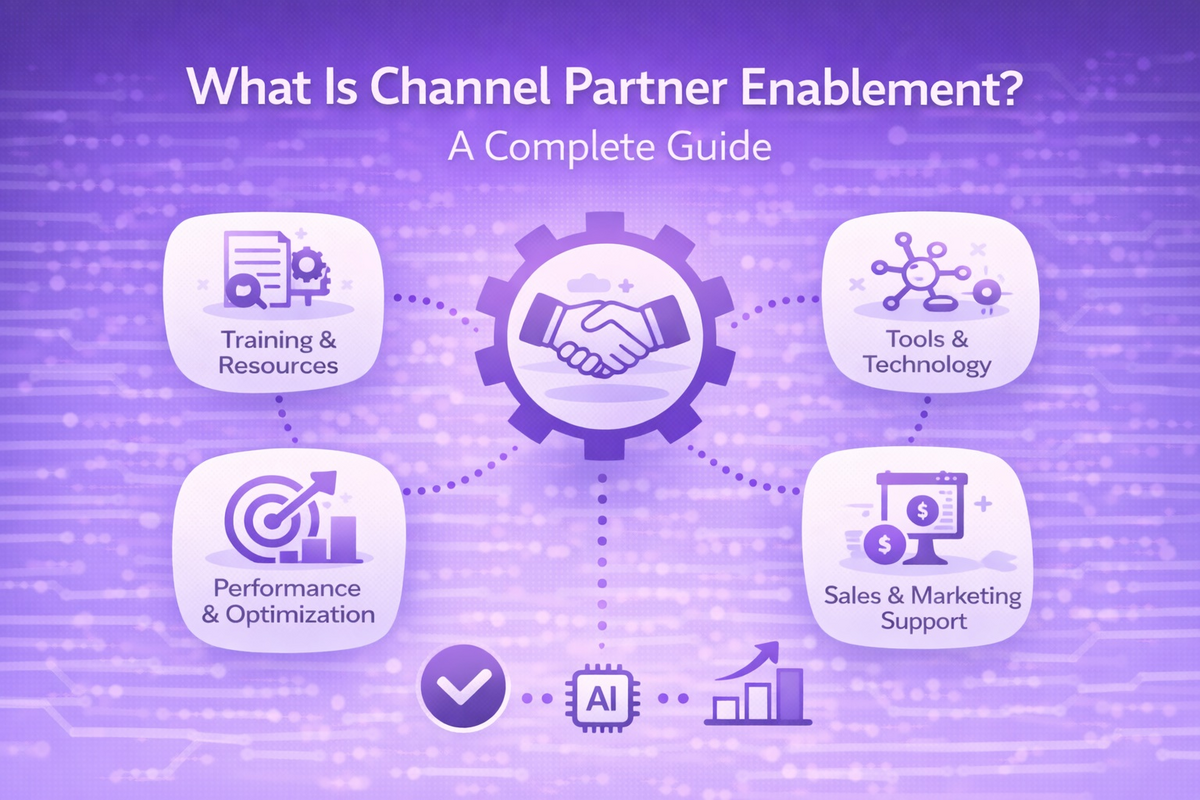

Let's put ourselves in your partners' shoes for a moment. They have a portfolio of products to sell, and their time is their most valuable asset. When a customer asks for a proposal, which product will they lead with? It’s going to be the one that’s easiest to sell and support. If your program is confusing or your content is hard to find, you’re losing out to competitors who make it simple. This is why channel enablement is so critical. It’s about creating a frictionless experience that makes partners want to sell your product, turning their preference into your competitive advantage.
What Exactly Is Channel Partner Enablement?
Channel partner enablement is the process of providing external partners with the knowledge, tools, content, and support they need. These partners include resellers, distributors, VARs, system integrators, and referral partners. With proper enablement, partners can effectively market, sell, and service your products.
Unlike direct sales enablement, which focuses on your internal team, channel enablement extends your go-to-market capabilities through third parties. These partners represent your brand in the market. They have their own businesses, their own priorities, and often sell competing or complementary products alongside yours.
Effective channel enablement bridges the gap between your product expertise and your partners' customer relationships. When done well, partners become an extension of your sales force. They reach markets, segments, and geographies you couldn't efficiently serve directly.
Why Your Business Needs Channel Partner Enablement
Extended market reach. Partners provide access to customers, regions, and verticals that would be costly to serve through direct sales. A strong partner ecosystem multiplies your go-to-market capacity.
Local expertise. Partners have deep relationships and domain knowledge in their markets. They understand local business practices, regulatory requirements, and customer expectations in ways that distant headquarters cannot.
Scalable growth. Adding partners scales revenue potential without proportionally increasing headcount. The cost of enabling a new partner is far lower than hiring additional direct sales reps.
Customer preference. Many buyers prefer working with trusted local partners. Partners provide setup services, ongoing support, and multi-vendor expertise. They add value that complements your product.
Competitive positioning. In markets where competitors have strong partner programs, lacking one puts you at a disadvantage. Partners influence purchasing decisions for complex enterprise solutions.
The Impact of Channel Partners by the Numbers
Investing in your partners isn't just a feel-good strategy; it delivers tangible business results that show up in your bottom line. When you properly equip your partners, you create a ripple effect that influences everything from the speed of your sales deals to the happiness of your end customers. A well-executed enablement program transforms partners from simple resellers into a powerful extension of your own team. Let's break down the specific, measurable ways that effective channel enablement makes a difference.
Faster Sales Cycles
Nothing slows down a deal like a partner who can't find the right information. When partners have to chase down answers about product specs, pricing, or security protocols, the sales cycle grinds to a halt. According to research from Impartner, "Enabled partners can close deals quicker due to easy access to information and tools." By providing a centralized hub of accurate, up-to-date content, you empower them to respond to customer inquiries and RFPs with speed and confidence. This self-sufficiency removes bottlenecks, shortens the time from initial contact to signed contract, and ultimately helps everyone close more business, faster.
Improved Customer Satisfaction
Your channel partners are often the primary face of your brand to the end customer. Their ability to represent your product knowledgeably and professionally has a direct impact on customer perception. A well-enabled partner can confidently handle tough questions, troubleshoot issues, and position your solution effectively. This expertise translates into a smoother buying process and a better overall customer experience. When partners are well-equipped, they can "provide excellent service, resulting in higher customer satisfaction." Happy customers are more likely to become repeat buyers and advocates for your brand, creating a loyal base that supports long-term growth.
Consistent Brand Messaging
Without clear guidance, partners may create their own sales materials or pull outdated information, leading to a fractured and inconsistent brand message in the market. Effective enablement solves this by providing a single source of truth. By supplying partners with "approved marketing and training materials," you ensure they are all telling the same compelling story about your brand. This consistency is crucial for building brand equity and trust. When every customer, regardless of which partner they work with, receives the same accurate information and value proposition, it strengthens your market position and prevents confusion.
Stronger Partner Relationships
Your partners have a choice in which products they prioritize. The easier you make it for them to sell your solution, the more likely they are to recommend it over a competitor's. Investing in their success through robust support and resources is key to building loyalty. As the team at Mindmatrix notes, offering great support fosters "happier and more loyal partners, who are more likely to promote your products." When partners feel valued and equipped to win, they become more engaged and motivated. This strong relationship turns a transactional arrangement into a true partnership focused on mutual growth.
What Goes Into a Channel Partner Enablement Kit?
Onboarding Your Partners for Success
First impressions matter. Onboarding sets the foundation for a productive partnership. Effective onboarding includes:
- Product and technical training
- Sales methodology and messaging guidance
- Partner portal orientation
- Introduction to support resources and escalation paths
- Clear expectations and success metrics
Aim to get partners productive quickly. A six-month onboarding process delays revenue. A two-week intensive program accelerates it.
Provide Ongoing Sales and Technical Training
Partners need both sales skills and technical skills. These often require different training tracks.
Sales training covers messaging, competitive positioning, qualification criteria, pricing, and deal registration. It should help partner salespeople confidently pitch your solution alongside their other offerings.
Technical training equips solution architects, engineers, and support staff to design, set up, and troubleshoot your products. Certification programs validate competency and build partner credibility.
Training should be ongoing, not one-time. Product updates, market changes, and competitive shifts require continuous learning.
Develop High-Impact Content and Collateral
Partners need ready-to-use content they can customize for their customers:
- Sales decks and one-pagers
- Product datasheets and technical specifications
- Case studies and customer success stories
- Demo environments and scripts
- Email templates and social content
- Proposal templates and RFP response content
Make content easily accessible through a partner portal. If partners can't find materials quickly, they'll create their own or avoid selling your product altogether.
Using an AI Knowledge Base for Partners
So, how do you build a partner portal that isn't just a digital filing cabinet? This is where an AI-powered knowledge base comes in. Think of it as a single source of truth that not only stores all your sales decks, technical specs, and marketing materials but also understands them. Instead of partners hunting through complex folder structures, they can simply ask a question and get an instant, accurate answer. This centralized approach ensures every partner has access to the most current and approved information, which is critical for maintaining brand consistency across your entire channel.
An AI knowledge base does more than just store information; it actively manages it. It can help partners quickly generate customized content for specific proposals or customer inquiries, pulling from the approved library of information. This means they spend less time creating materials from scratch and more time selling. Furthermore, a system like this can proactively flag outdated information, ensuring your partners are always using the most up-to-date messaging and product details. This continuous learning and content refreshment cycle is essential for keeping your partners competitive and aligned with your company's latest developments.
Offer Clear Deal Registration and Support
Deal registration programs protect partner investments by preventing channel conflict. Beyond registration, partners need responsive support when deals get complex:
- Sales engineering assistance for technical questions
- Executive sponsorship for strategic opportunities
- Pricing and proposal support
- Contract and legal guidance
Fast, helpful support builds partner loyalty. Slow or bureaucratic processes push partners toward competitors who are easier to work with.
Manage Marketing Development Funds (MDF)
MDF programs provide financial support for partner marketing activities. Effective MDF programs are:
- Simple to access and claim
- Flexible enough to support various marketing tactics
- Tied to measurable outcomes
- Structured to encourage co-investment rather than pure subsidy
Track MDF ROI to understand which investments generate pipeline and revenue.
Channel Enablement vs. Sales Enablement: What's the Difference?
While channel enablement shares principles with sales enablement, key differences exist. Partners won't attend mandatory all-hands meetings. They won't complete lengthy certification programs unless they see clear value. Everything you ask of partners competes with other demands on their time.
| Dimension | Sales Enablement | Channel Enablement |
|---|---|---|
| Audience | Internal employees | External partners |
| Control | High—direct management | Lower—partners are independent |
| Competing priorities | Your products only | Multiple vendors, products |
| Incentives | Salary, commission, career | Partner economics, margins |
| Access | Full company resources | Limited, curated resources |
| Training delivery | Direct, in-person | Often self-service, remote |
How to Build Your Partner Enablement Program
Follow the Channel Planning Process
A successful channel program starts with a solid plan, not just a list of potential partners. Before you even think about recruiting, you need to define your ideal partner profile—think about their target market, technical skills, and business model. Then, establish clear goals and KPIs. What does success actually look like? Is it revenue, deal registrations, or market share? Your plan should map the entire partner journey, from onboarding to co-selling, and detail the resources you'll provide. This includes marketing collateral and the pre-approved content they'll need for complex proposals and RFP responses. A strategic approach ensures you invest wisely and equip partners to become a true extension of your sales team.
Set Clear Partner Tiers and Expectations
Not all partners deserve equal investment. Structure your program with tiers that match enablement investment to partner commitment and performance.
Example tier structure:
- Registered: Basic access, minimal requirements
- Silver: Trained sales reps, modest revenue commitment
- Gold: Certified technical staff, significant revenue commitment
- Platinum: Strategic relationship, joint business planning
Create an Easy-to-Use Partner Portal
Centralize enablement resources in a partner portal that provides:
- Training courses and certifications
- Content library with search and filtering
- Deal registration and pipeline tracking
- MDF request and claim management
- Support ticket submission
- Performance dashboards and reporting
The portal should be self-service for most needs. Partners shouldn't require your involvement for routine tasks.
Develop Content Your Partners Actually Need
Generic content created for direct sales rarely works for partners. Create content that:
- Positions the partner as the customer's primary relationship
- Explains the combined value of your product plus partner services
- Includes customizable sections for partner differentiation
- Respects partner brand guidelines alongside your own
Implement Incentive Programs
Partners are running a business, and their primary motivation is profitability. A well-structured incentive program directly appeals to this by rewarding the behaviors you want to encourage. These programs are more than just deal margins; they are a powerful tool to drive engagement and loyalty. Consider a mix of rewards, including performance-based bonuses for hitting revenue targets, rebates for large deals, or even non-monetary perks like co-marketing funds and lead-sharing opportunities. The key is to make the program simple to understand and the rewards attainable. When partners see a clear path from their effort to their reward, they are far more likely to invest their time and resources in selling your solution over a competitor's.
Establish Feedback Systems
Your partners are on the front lines, hearing directly from customers and prospects every day. This makes their insights incredibly valuable. Creating a formal system for feedback shows that you view them as true partners, not just a sales channel. Go beyond informal check-ins and establish regular partner advisory councils, send out quarterly surveys, or create a dedicated feedback portal. The most critical step, however, is to act on what you hear. When partners see their suggestions lead to improvements in your products, content, or processes, it builds immense trust and strengthens the relationship. This two-way communication ensures your enablement program evolves to meet real-world challenges.
Define Key Roles like Partner Success Managers
Partners can't succeed in a vacuum. They need a dedicated, human point of contact within your organization who is invested in their success. This is where a Partner Success Manager (PSM) or Channel Account Manager (CAM) becomes essential. This person acts as the partner's advocate, coach, and primary resource. Their role is to ensure partners have everything they need, from finding resources in the partner portal to getting technical support for a complex deal. A great PSM understands the partner's business model and helps them integrate your solution into their offerings effectively. By investing in these key roles, you provide the hands-on support that turns a good partnership into a great one that generates revenue for both sides.
Continuously Measure and Optimize Your Program
Track metrics that reveal enablement effectiveness:
- Training completion rates — Are partners engaging with content?
- Certification rates — Are partners developing competency?
- Time to first deal — How quickly do new partners become productive?
- Content utilization — Which resources get used, which don't?
- Pipeline and revenue by tier — Does investment correlate with results?
- Partner satisfaction — Do partners find the program valuable?
Best Practices for a Successful Channel Enablement Program
Building a program is one thing; making it thrive is another. The most successful channel enablement programs are built on a foundation of mutual respect, clear communication, and a genuine commitment to partner success. It’s not about just throwing resources at your partners and hoping for the best. It’s about creating a supportive ecosystem where they feel equipped, valued, and motivated to represent your brand. By focusing on a few core principles, you can transform your partner program from a simple revenue channel into a powerful growth engine built on strong, lasting relationships. Let's look at some best practices that make all the difference.
Personalize Support for Your Partners
Your partners aren't a monolith. Each has a unique business model, customer base, and set of strengths. A one-size-fits-all approach to support will inevitably leave some partners feeling underserved. Take the time to understand what makes each partner tick. A value-added reseller might need deep technical training and co-branded solution briefs, while a referral partner may only need simple marketing materials and a clear commission structure. By tailoring your support, you show partners that you see them as individuals and are invested in their specific path to success. This personalized attention builds loyalty and encourages them to invest more of their time and energy into selling your products.
Keep Your Program Simple and Accessible
Imagine being a partner who sells products from ten different companies. If your program is a maze of complex rules and hidden resources, you’ll quickly fall to the bottom of their priority list. Simplicity is your best friend. Your partner portal should be intuitive, with a clean layout where partners can find what they need in seconds. Whether it's a sales deck, a technical datasheet, or content for a proposal, easy access is critical. If partners can't find the right information quickly, they might create their own (risking off-brand messaging) or simply give up on the opportunity. Make everything as frictionless as possible, from deal registration to accessing marketing funds. The easier you make it to work with you, the more work they’ll do for you.
Stay Flexible and Adapt to Change
The market is always shifting, and your partners are on the front lines. They have invaluable insights into customer needs, competitive threats, and emerging trends. A rigid channel program that doesn't account for this reality will quickly become outdated. Build mechanisms for gathering partner feedback, whether through regular check-in calls, surveys, or a partner advisory council. More importantly, act on that feedback. When partners see their suggestions lead to real changes in the program, it reinforces that you view them as true collaborators. Being ready to adapt your strategy based on their input and evolving market conditions will keep your program relevant, effective, and respected.
Celebrate Partner Successes
Everyone appreciates being recognized for their hard work, and your partners are no exception. While commissions and margins are essential, they aren't the only motivators. A robust recognition program can foster a strong sense of community and loyalty. Celebrate major wins publicly. Feature a "Partner of the Quarter" in your newsletter, give shout-outs on social media, or host an annual awards ceremony. These gestures show that you're paying attention and that you value their contributions beyond the numbers on a spreadsheet. Celebrating success not only makes your top performers feel great but also provides a model for other partners to follow, creating a culture of achievement across your entire channel.
Are You Facing These Channel Enablement Challenges?
Struggling to Get Your Partners' Attention?
Your product competes for attention with everything else partners sell. Winning mindshare requires making your product easy and lucrative to sell. Simplify everything — complex products, confusing pricing, and bureaucratic processes push partners toward easier alternatives.
Dealing with Too Much (or the Wrong) Content
As enablement materials accumulate, partners struggle to find what they need. Set up content governance: regular audits, clear versioning, sunset dates for old materials, and intuitive organization.
When Partners Don't Follow the Plan
With limited visibility into partner activities, quality varies widely. Certification programs, regular sharing, and performance monitoring help maintain standards without micromanaging independent businesses.
How to Prevent Channel Conflict
When partners compete with each other or with your direct sales team for the same opportunities, relationships sour. Clear rules of engagement, fair deal registration, and transparent conflict resolution processes minimize friction.
Frequently Asked Questions
How is channel enablement different from partner marketing?
Partner marketing focuses on generating demand and awareness with end customers. Channel enablement focuses on equipping partners to convert that demand into revenue. They're complementary functions that often work closely together.
How much should we invest in channel enablement?
Investment should scale with channel revenue contribution and strategic importance. Organizations with 50%+ of revenue through partners typically have dedicated channel enablement teams. Those with smaller channel programs may embed enablement within partner management roles.
What technology supports channel enablement?
Partner Relationship Management (PRM) platforms centralize portal, training, deal registration, and MDF management. Learning Management Systems (LMS) deliver training. Content management tools organize and distribute collateral.
How do we get partners to actually complete training?
Tie training to things partners value: certifications that help them win deals, access to higher tiers, better margins, or MDF eligibility. Make training short, relevant, and immediately applicable.
Should enablement differ by partner type?
Yes. Resellers need sales skills. System integrators need deep technical training. Referral partners need product awareness but minimal technical depth. Tailor enablement to each partner type's role in the customer journey.
Related Resources
- What Is Sales Enablement Software?
- What Is Presales Enablement?
- AI RFP Automation for Sales Engineers
Working with Limited Resources
Not every company has a bottomless budget for partner enablement, and that's okay. In fact, constraints can force you to be more strategic. Remember, the cost of enabling a new partner is far lower than hiring another direct sales rep, so you're already playing a smart game. The key is to focus your efforts where they'll count the most. Instead of trying to support everyone equally, structure your program with tiers that align your investment with a partner's commitment and performance. This allows you to concentrate on your highest-impact partners. At the same time, simplify everything from pricing to support. When you make it easy for partners to work with you, you build loyalty and encourage them to prioritize your products over a competitor's.
Key Takeaways
- Make it easy for partners to sell your product: Your partners have choices, so create a frictionless experience. Centralize all essential content in an accessible portal, simplify processes like deal registration, and provide responsive support to win their attention.
- Structure your program with clear tiers: A one-size-fits-all approach is ineffective. A tiered system lets you match your investment of time and resources to a partner's commitment and performance, focusing your best support on those who deliver the most value.
- Treat partners like true collaborators: Go beyond just providing resources to build loyalty. Create feedback channels to act on their insights, personalize your support to fit their business model, and publicly celebrate their wins to show you value their success.
Share this post
Link copied!









_EasiestToDoBusinessWith_EaseOfDoingBusinessWith.svg)
_HighPerformer_HighPerformer.svg)





_BestSupport_QualityOfSupport.svg)


