
What is RFX Software? A Complete Guide for 2026
December 29, 2025
By
Evie Secilmis


That massive, hundred-question RFP isn't just a test. It's a look inside the buyer's mind. For them, the entire RFX process—whether it's an RFI, RFQ, or RFP—brings structure to a high-stakes decision. They have to compare vendors on a level playing field and justify their choice internally. Understanding their "why" is your secret weapon. When you know what motivates their questions, you can craft a response that speaks directly to their needs. This guide breaks down rfx in procurement from the buyer’s side, giving you the insights to create more persuasive responses to all types of rfxs.
Key Takeaways
- Match Your Strategy to the Request: A winning response starts with understanding the buyer's intent. Differentiate your approach for an RFI (showcasing expertise), an RFP (presenting a detailed solution), and an RFQ (offering a competitive price) to meet them where they are.
- Recognize That Manual Processes Cost You Deals: The time your team spends on formatting, chasing down answers, and managing documents is time they aren't spending on strategy. These administrative bottlenecks directly impact your response quality and limit the number of opportunities you can pursue.
- Use AI to Shift from Admin to Strategy: Implement AI-powered software to automate first drafts, centralize team collaboration, and maintain data accuracy. This frees your experts to focus on personalizing proposals and crafting a compelling narrative that wins business.
So, What Exactly is an RFX?
If you’re in sales, you’ve likely come across a flurry of acronyms that all start with “RF.” RFP, RFI, RFQ—it can feel like alphabet soup. The umbrella term for all these documents is RFX, which stands for “Request for X.” Think of it as a catch-all term in procurement for any formal request a company sends out to potential suppliers. The “X” is just a placeholder for what they’re specifically asking for, whether it’s general information, a detailed proposal, or a price quote. Understanding the RFX process is the first step to mastering your response and winning more deals. It’s the framework buyers use to make informed decisions, and knowing how it works from their side gives you a strategic edge.
Decoding the "X" in RFX
So, what does that “X” actually stand for? It’s a variable that changes based on what the buyer needs to know at a particular stage of their purchasing process. While there are many types, you'll most commonly encounter three main players in the RFX family.
- Request for Information (RFI): This is often the first step. A buyer sends out an RFI to gather general information about a supplier's capabilities and offerings. It’s a fact-finding mission for them.
- Request for Proposal (RFP): This is the big one. An RFP is a detailed document outlining a specific project or problem, inviting you to submit a comprehensive proposal on how your solution can help.
- Request for Quotation (RFQ): This one is all about the bottom line. An RFQ is used when a buyer knows exactly what they want and is simply looking for the best price.
The Critical Role of RFX in Procurement
To craft a winning response, it helps to understand why companies use RFXs in the first place. From the buyer's perspective, the RFX process brings structure and fairness to making big purchasing decisions. It allows them to compare multiple vendors using a standardized set of questions, ensuring they evaluate everyone on a level playing field. This structured approach helps them gather all the critical details they need to justify their choice internally. Ultimately, it’s about making an informed, defensible decision that secures the best possible value and solution for their needs. By creating a transparent and competitive environment, companies can confidently select the right partner.
RFP, RFQ, RFI: Meet the RFX Family
Think of the RFX family as a set of tools, each designed for a specific job in the procurement process. While they all start with "Request for," that final letter changes everything. For sales and proposal teams, knowing the difference between an RFI, RFP, and RFQ is the first step to crafting a winning response. It tells you exactly what the buyer is looking for—whether they're just exploring options, seeking a detailed solution, or simply hunting for the best price. Understanding these nuances helps you focus your energy where it counts and tailor your response to meet the buyer's exact needs at that stage of their journey.
Request for Information (RFI)
An RFI is the "just looking" phase of the procurement process. A company uses a Request for Information when it needs to gather general information and get a feel for the market. It’s a low-stakes way to understand what solutions, services, or products are available to solve a potential problem. Think of it as casting a wide net to see what you catch. For the buyer, it’s about education and discovery. For your sales team, an RFI is your chance to introduce your company, showcase your expertise, and build a relationship early on. The goal isn't to win a deal just yet, but to position your company as a credible partner for when the buyer is ready to get serious.
Finding Solutions: The Request for Proposal (RFP)
This is where things get specific. A Request for Proposal is sent when a buyer has a defined need or a complex problem and wants to see how different vendors would solve it. Unlike an RFI, an RFP asks for a detailed plan, including your methodology, timeline, and, of course, pricing. This is the document that requires a comprehensive, persuasive response that proves you don’t just understand the problem—you have the best solution for it. Responding to an RFP is often a heavy lift, requiring input from multiple departments, but it’s also where the biggest opportunities lie. It’s your formal pitch to win the business.
Comparing Costs: The Request for Quotation (RFQ)
When a buyer issues a Request for Quotation, they know exactly what they want and are primarily focused on price. The specifications for the product or service are already crystal clear, so there’s no need for creative problem-solving or detailed proposals. The main question an RFQ seeks to answer is, "How much will this cost?" For example, a company might send out an RFQ for 500 new laptops with specific hardware requirements. The decision will likely come down to which qualified vendor offers the best price. Responses to RFQs are typically straightforward, focusing on line-item pricing and delivery terms rather than a narrative solution.
Beyond the Big Three: A Look at Other RFXs
While RFI, RFP, and RFQ are the most common players, the RFX world is much larger. You might encounter a variety of other documents, each with its own purpose. For instance, a Request for Qualifications (also, confusingly, RFQ) is used to vet vendors based on their experience and credentials before a project is even defined. You might also see a Request for Tender (RFT) or Request for Bid (RFB), which are often used in the public sector and are highly structured. There are many RFX types, and knowing what each one asks for is key to deciding whether—and how—to respond.
Request for Offer (RFO)
Think of a Request for Offer as an invitation to get creative. When a buyer sends out an RFO, they have a clear problem but are open to innovative ways to solve it. Instead of providing rigid specifications, they are asking you to come to the table with your best ideas. This is your chance to shine by proposing a unique solution that sets you apart from the competition. An RFO response is less about checking boxes and more about demonstrating your expertise and strategic thinking. It’s an opportunity to show the buyer not just what you do, but how you think, making it a great fit for companies that pride themselves on their innovative approach.
RFP Lite
An RFP Lite is exactly what it sounds like: a shorter, more condensed version of a traditional RFP. You might see one for smaller, low-risk projects or for routine purchases where a full-blown proposal process isn't necessary. These documents often contain just a handful of questions designed to quickly qualify vendors. While it’s tempting to treat them less seriously, a polished and professional response is still crucial. This is where having an efficient process pays off, allowing your team to produce a high-quality response without dedicating days to the task. It’s about being quick and effective, proving you’re an easy and reliable partner to work with, no matter the size of the deal.
Request for Partner (RFP)
Don't be fooled by the familiar acronym; a Request for Partner is a modern twist on the procurement process. This newer type of request signals that a buyer is looking for more than just a vendor—they want a true collaborator. The focus shifts from a rigid, one-way submission to a more open dialogue. The buyer wants to talk things through and co-create a solution with their chosen supplier. Responding to this type of request requires a focus on building rapport and demonstrating your ability to work as a strategic partner. It’s a move away from transactional relationships and toward building long-term, collaborative partnerships.
eRFP (Electronic Request for Proposal)
An eRFP isn't a different type of request, but rather a different format for managing it. It’s simply a standard RFP that is issued and managed through online software or a procurement portal. This digital approach is becoming the norm because it makes the process faster and more organized for everyone involved. For buyers, it simplifies vendor comparison. For you, it means submissions are streamlined and communication is centralized. Responding to an eRFP is even easier when you use an AI-powered platform, which can integrate with these systems to help you generate accurate first drafts in minutes, not hours.
Request for Bid (RFB)
A Request for Bid is a formal and highly structured process, often used by government agencies and public sector organizations that follow strict procurement rules. An RFB is similar to an RFP, but it typically requires vendors to submit a "sealed bid" that remains unopened until a specific deadline. This ensures a fair and transparent evaluation process where all bids are reviewed simultaneously. While the scope can be complex, the decision often comes down to which qualified vendor can meet the requirements at the best price. Responding to an RFB requires meticulous attention to detail and a clear understanding of the buyer's rigid formatting and submission requirements.
When Should You Use an RFX Process?
Knowing when to use a formal RFX process can feel like a puzzle, but it really comes down to the complexity and strategic importance of what you’re buying. If you’re just ordering new office chairs, a simple quote will do. But for bigger, more impactful decisions, a structured approach is your best friend. The
For Tackling Complex Procurement Needs
Think about the last time you made a major purchase, like a new software platform or hiring a consulting firm. These aren't simple transactions; they’re complex projects with many moving parts. An RFX, particularly a Request for Proposal (RFP), is designed for these situations. It prompts suppliers to provide more than just a price tag—it asks for detailed plans and solutions explaining how they’ll meet your specific needs. This process is essential when you need to understand a vendor’s approach and capabilities, not just their cost. It helps you dig into the "how" behind their offer, ensuring you find a true partner for your complex projects.
To Compare and Evaluate Multiple Vendors
When you’re considering several vendors, comparing them can quickly become an apples-to-oranges nightmare. One might send a flashy presentation, another a simple email with a quote. The RFX process brings order to this chaos. It provides a structured framework that standardizes how you request information and how vendors respond. By asking every potential partner the same questions in the same format, you can compare proposals fairly and make a data-driven decision. This structured path ensures every vendor gets an equal shot and that your final choice is based on solid, comparable information.
For Making Strategic Sourcing Decisions
Ultimately, procurement isn't just about finding the lowest price—it's about finding the best value and the right long-term partner. The RFX process is a key tool for strategic sourcing. It helps you gather the critical details needed to see the bigger picture, allowing you to weigh factors like a vendor's financial stability and industry reputation alongside their price and proposed solution. Choosing the right RFX type for your needs helps you align procurement activities with your company's broader goals. It transforms a simple purchase into a strategic decision that can support your business's growth for years to come.
The Buyer's Journey: A Look Inside the RFx Process
To really nail your response, you need to step into the buyer's shoes and understand their journey. The RFx process isn't just a document they send out; it's a carefully managed project with distinct stages, each designed to help them make the best possible decision with confidence. From their side of the table, this structured approach is essential for bringing clarity and fairness to a complex, high-stakes purchase. By understanding what’s happening at each stage—from the initial creation of the document to the final evaluation—you can anticipate their needs and tailor your proposal to address their core concerns. This inside look reveals the "why" behind their process, giving you a strategic advantage and helping you craft a response that truly resonates with the evaluation team.
Stage 1: RFx Creation
Before an RFx ever lands in your inbox, the buying organization has already done a ton of internal work. This is the creation stage, where a team of stakeholders collaborates to define their needs, outline project goals, and draft the questions they'll ask potential vendors. Every question in that document is there for a reason—it's a direct reflection of a pain point they're trying to solve or a capability they need. This is their moment to translate their business challenges into a formal request. Understanding this helps you see the RFx not as a checklist, but as a map of their priorities. The more you can connect your answers back to the underlying problems they’re trying to solve, the stronger your proposal will be.
Stage 2: RFx Administration
Once the RFx is finalized and sent out, the process moves into the administration stage. This is the logistical hub of the buyer's journey. During this phase, the procurement manager or project lead is responsible for distributing the document, fielding questions from all potential vendors, and collecting the completed proposals by the deadline. Their primary goal here is to maintain a fair and level playing field for everyone involved. This is why they insist on structured Q&A periods and firm deadlines—it ensures that every vendor has access to the same information and that the procurement process remains transparent and defensible. For you, this means following instructions to the letter is non-negotiable.
Stage 3: RFx Evaluation
This is the moment of truth. After the submission deadline passes, the buyer’s evaluation committee gets to work. They review each proposal, scoring the responses against a predetermined set of criteria that they established back in the creation stage. This structured approach allows them to compare vendors objectively and justify their final decision to internal leadership. They aren't just looking for the cheapest option; they're searching for the best overall value and the partner who demonstrates the deepest understanding of their needs. Your job is to make their decision easy by providing clear, compelling answers that align directly with their stated goals and prove you’re the best fit for the job.
What to Expect Inside an RFx Document
While the content will vary depending on the project, most RFx documents follow a standard format. Familiarizing yourself with these key sections will help you quickly dissect the request, find the information you need, and decide if the opportunity is a good fit for your business. Think of it as learning the anatomy of the document so you can efficiently get to the heart of what the buyer is asking for. Paying close attention to these core components ensures you don't miss any critical details that could make or break your proposal.
Summary
The summary, or executive summary, is your starting point. This section provides a high-level overview of the project, the issuing organization, and what they hope to achieve. It’s the "at-a-glance" view that tells you everything you need to know to make an initial go/no-go decision. Read this part first to quickly understand the scope of the opportunity and determine if it aligns with your company's expertise and strategic goals before you invest time in a full review.
Key Dates
This section is all about the timeline. It outlines every critical deadline you need to be aware of, including the final date for submitting questions, the proposal submission due date, and the anticipated date for the final decision. These dates are almost always non-negotiable, so the first thing you should do is plug them into your calendar. Missing a deadline is one of the fastest ways to get disqualified, so treat this section as your project schedule.
Documents
Look for a section that lists supplementary documents or attachments. This is where you'll find essential resources like pricing templates, terms and conditions, and technical specifications. It's also where the buyer will issue any changes or clarifications to the original RFx in a document called an "addendum." It is absolutely critical to check for addenda regularly throughout the response process, as they often contain updated requirements or answers to questions that could significantly impact your proposal.
Why Using RFXs is a Game-Changer
When you’re making a significant purchase or sourcing a new partner, you want to make the best possible choice. The RFX process isn't just about creating paperwork; it’s a strategic framework that brings clarity, fairness, and value to your procurement decisions. By standardizing how you gather and compare information, you create a more efficient and effective system for both your team and the vendors you’re evaluating. This structured approach helps you move forward with confidence, knowing you’ve done your due diligence.
Streamline Your Procurement Workflow
RFX processes involve a lot of simple, high-volume tasks that can take up a significant amount of time. Automating them frees up your team to focus on more strategic work. Instead of getting bogged down in manual data entry and follow-ups, your team can concentrate on analyzing proposals and building vendor relationships. A well-defined RFX process creates a clear, repeatable workflow that reduces confusion and keeps everything moving forward. This efficiency benefits everyone, leading to faster procurement cycles and quicker decision-making.
Get Greater Transparency From Suppliers
A formal RFX process levels the playing field for all potential suppliers. By asking the same questions and requesting information in the same format, you ensure every vendor gets a fair shot. This structure encourages suppliers to compete, which helps you get the best possible deal for what you need. It removes ambiguity and minimizes the chances of misunderstandings, creating a transparent environment where vendors can put their best foot forward. This clarity builds trust and fosters healthier, more productive long-term supplier relationships.
Make Better, Data-Driven Decisions
Making a major sourcing decision based on gut feelings is a recipe for disaster. RFX management provides the structured framework you need to standardize requests and compare proposals fairly. This allows you to make data-driven sourcing decisions rather than relying on intuition alone. When you can easily compare vendor capabilities, pricing, and qualifications side-by-side, you’re in a much better position to identify the partner that truly aligns with your business goals. This systematic approach ensures your final choice is both defensible and strategic.
Control Costs and Reduce Procurement Risk
Ultimately, every business wants to get the best value for its money while minimizing potential downsides. The RFX process is designed to do just that. By gathering detailed information from multiple suppliers, you can compare different options and secure the best price for your requirements. At the same time, the process helps you manage risk by thoroughly vetting each vendor’s stability, experience, and ability to deliver. This makes the entire process of choosing a supplier fair, open, and efficient, protecting your bottom line and your business.
Why Responding to RFXs Can Be a Headache
If you’ve ever felt like you’re drowning in a sea of spreadsheets, documents, and last-minute emails while on a tight deadline, you’re not alone. The RFX process, while essential for business, can often feel like a major drain on your team’s time and energy. It’s a high-stakes activity where a single misstep can cost you a deal, yet the process itself is often bogged down by manual tasks and logistical hurdles.
From deciphering confusing formats to chasing down subject matter experts for answers, the entire workflow can feel disjointed and inefficient. Your team is packed with talented people who know how to sell, but they end up spending more time managing documents than they do crafting a winning strategy. This isn't just frustrating; it directly impacts your ability to respond to more opportunities and, ultimately, your win rate. Let’s break down some of the most common headaches that turn a promising RFX into a major source of stress.
The Endless Cycle of Admin and Formatting
One of the biggest time sinks in the RFX process is simply wrestling with the documents themselves. Sales teams often waste hours trying to decode bizarre and inconsistent RFP formats, where the formatting becomes a bigger challenge than the actual questions. You might spend the first half of your day just copying and pasting questions into a workable document, reformatting tables, and ensuring your branding is consistent—all before you’ve even written a single word of your response. This administrative burden pulls your focus away from what truly matters: showcasing your value and persuading the client that you’re the right choice.
When Your Team Isn't on the Same Page
Responding to an RFX is a team sport. You need input from sales, legal, product, and finance, but getting everyone on the same page is easier said than done. Fragmented communication is one of the most common obstacles teams face, leading to endless email chains, conflicting feedback in different documents, and the dreaded question: "Is this the final version?" When your subject matter experts are spread across different departments, improving your cross-functional collaboration is key. Without a central hub for information, tracking down answers and approvals becomes a full-time job, creating bottlenecks that put your deadline at risk.
Juggling Limited Resources with Big-Picture Strategy
Every hour your team spends on manual RFX tasks is an hour they aren’t spending on proactive selling. Managing RFPs, RFIs, and RFQs as separate, one-off projects is an inefficient approach that drains your sales team and can kill deals before they even get off the ground. Instead of developing a compelling strategy for each response, your team gets stuck in a reactive cycle of just trying to get the submission out the door. This resource strain forces you to be selective about which opportunities you pursue, potentially leaving valuable revenue on the table.
Struggling to Meet Complex Requirements
RFXs are incredibly detailed for a reason—the issuer has a complex problem and needs to be sure you can solve it. Winning these deals requires a strategic, data-driven approach that proves you understand their needs and can meet every single requirement. A single missed detail or inaccurate piece of information can get your proposal disqualified immediately. The pressure to be perfectly accurate, fully compliant, and highly persuasive all at once is immense. Without a streamlined process to manage these complexities, the risk of human error increases, jeopardizing the entire opportunity.
How AI Transforms the RFX Process
Responding to RFXs has traditionally been a manual, often grueling, process. It involves hunting down information from past proposals, chasing subject matter experts for answers, and spending far too much time on formatting instead of strategy. This administrative burden doesn't just drain your team's energy; it slows down your sales cycle and introduces the risk of human error. Answering hundreds of questions with copy-pasted information can easily lead to inconsistent or outdated responses, which can damage your credibility with a potential client.
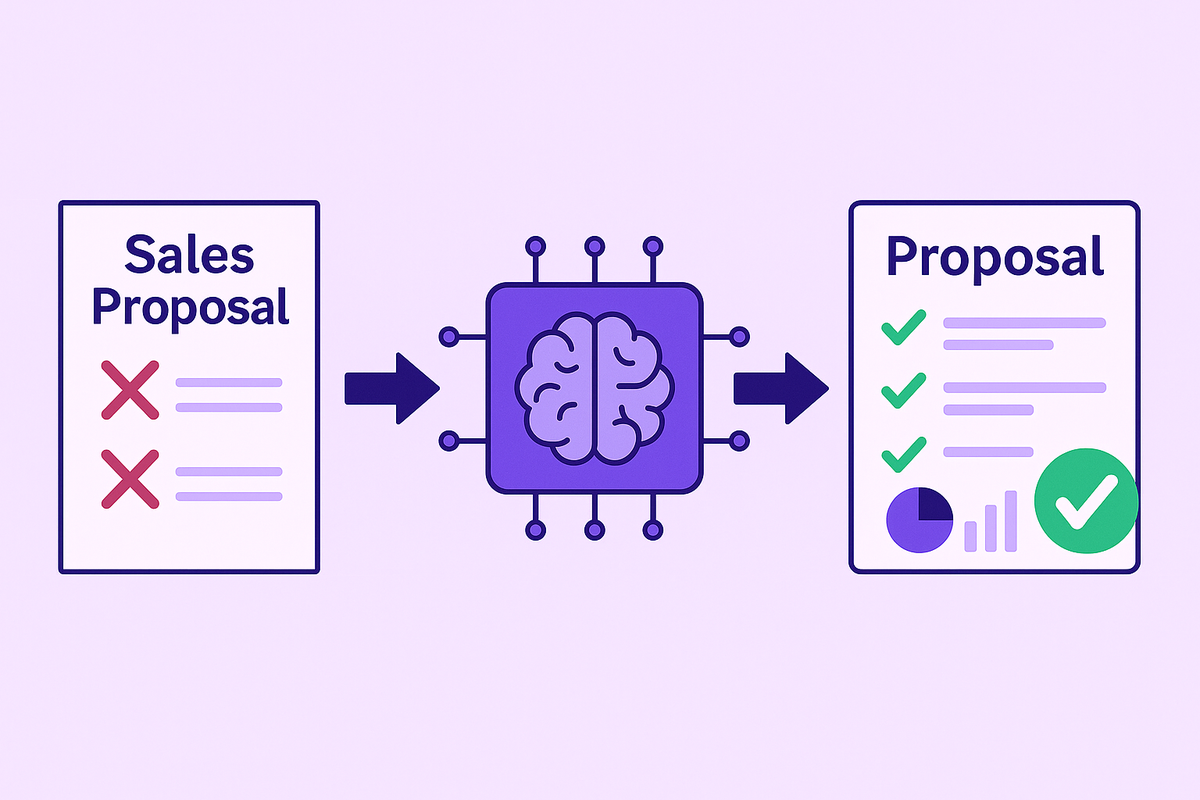
This is where AI response software completely changes the game. Instead of treating each RFX as a brand-new project, AI tools use your company's collective knowledge to build high-quality responses in a fraction of the time. An AI deal desk solution acts as a central brain for your sales and proposal teams, learning from every document you create. It helps you move from a reactive, scramble-to-the-deadline approach to a proactive, strategic one. By handling the repetitive tasks, AI frees your team to focus on what truly matters: tailoring your proposal to the client's specific needs and crafting a narrative that wins the deal.
The Impact of Automation by the Numbers
If you’re wondering whether automation is worth the investment, the numbers speak for themselves. The efficiency gains are not just marginal; they're transformative. Companies that use RFX software can respond to 43% more RFPs and get each response out the door 40% faster. Imagine what your team could do with that kind of capacity. It’s the difference between selectively bidding on a few promising deals and having the bandwidth to pursue every good-fit opportunity that comes your way. This isn't about making your team work harder; it's about automating the simple, high-volume tasks so they can dedicate their brainpower to crafting a winning strategy.
Save Hours by Automating First Drafts
Imagine starting an RFP with 80% of the work already done. That’s the power of AI automation. Instead of your team spending hours, or even days, digging through old documents and spreadsheets for the right answers, an AI platform can generate a complete first draft in minutes. It pulls from a library of your best, most up-to-date content to answer questions accurately. This isn't just about filling in the blanks; the AI is smart enough to adapt information to the specifics of each project. This massive time-saver allows your team to skip the tedious administrative work and jump straight into refining, personalizing, and perfecting the proposal. The result is a higher quality response, delivered without the last-minute rush.
Help Your Team Collaborate More Effectively
Fragmented communication is one of the biggest hurdles in the RFX process. Endless email threads, conflicting document versions, and uncertainty about who is handling which section can lead to chaos and costly mistakes. An AI-powered platform centralizes the entire workflow, creating a single source of truth for your team. You can assign questions to subject matter experts, track progress in real-time, and leave comments all in one place. This eliminates the confusion of a disjointed process and ensures everyone is working together seamlessly. When your team can collaborate effectively, you not only produce a better proposal but also reduce internal friction and stress.
Maintain High-Quality, Consistent Data
Sending a proposal with outdated product information or inconsistent messaging is a quick way to lose a potential client's trust. Manually vetting every piece of data is nearly impossible, especially when you're on a tight deadline. AI acts as your knowledge ledger, proactively identifying inconsistent or outdated information across all your connected systems. Think of it as a quality control expert that never sleeps. By flagging old statistics, retired product names, or conflicting details, the AI ensures that every response you send is built on accurate, verified information. This commitment to quality demonstrates professionalism and gives your proposals the credibility they need to stand out.
Keep Your Information Current and Accessible
A great response platform doesn't just use your existing knowledge; it helps you improve it over time. As your team edits and finalizes responses, the AI learns from those changes. The new, improved answers are automatically saved and categorized in your central knowledge library, ready for the next proposal. This creates a powerful feedback loop where your content gets smarter and more refined with every RFX you complete. Instead of your best answers getting lost in a completed file, they become part of a living, breathing knowledge base that makes your team more efficient and effective over time. This continuous improvement is one of the key benefits of AI in the RFX process.
Actionable Tips for a Winning RFx Response
A winning RFx response is more than just a collection of correct answers; it’s a strategic document that persuades, builds trust, and proves you’re the right partner. But with tight deadlines and limited resources, it’s easy to fall into a reactive cycle of just getting the proposal out the door. The key is to shift from simply completing the document to strategically managing the opportunity. These tips will help you focus your efforts where they matter most, so you can create responses that not only meet the requirements but also stand out from the competition.
Decide if the Opportunity is Right for You
Before you write a single word, take a step back and ask the most important question: should we even respond to this? It’s tempting to chase every opportunity that comes your way, but your team’s time is your most valuable resource. Do some initial research on the company issuing the request. Does this project align with your business goals? Do you have a strong, existing relationship with them, or are you coming in cold? If your chances of winning are slim, it’s often a smarter move to politely decline and save your energy for a better-fit opportunity. A strategic "no" protects your team from burnout and allows you to put your full effort into the deals you can actually win.
Connect with the Buyer
The RFX document tells you what the buyer wants, but it doesn’t always tell you why. Whenever possible, try to establish a direct line of communication. Reaching out to the buyer with thoughtful questions shows you’re engaged and gives you a chance to understand their underlying needs and pain points. This conversation can provide critical context that your competitors, who only read the document, will miss. It also transforms you from just another name on a list into a real person and a potential partner. Building that human connection can be a powerful differentiator when the evaluation team is making its final decision.
Customize Your Response
We’ve all seen a "Frankenstein" proposal—one that’s clearly stitched together from bits and pieces of old responses. It’s a fast way to answer questions, but it’s also a fast way to the "no" pile. While a template is useful for standard company information, the core of your proposal should be tailored specifically to the buyer’s unique challenges. Show them you’ve listened by speaking their language and directly addressing their stated needs. This is where AI-powered tools can be a huge help. By automating the first pass with approved content, an AI deal desk solution frees up your experts to focus on crafting a compelling, personalized narrative that speaks directly to the client, ensuring quality over mere quantity.
Price Your Solution Thoughtfully
Competing on price alone is a race to the bottom. While your quote needs to be competitive, offering the lowest number isn’t always the winning strategy. A price that seems too low can make a buyer question whether you truly understand the scope of the project or if you’re cutting corners. Your pricing should be a reflection of the value you provide. Use the insights you gathered from connecting with the buyer to build a quote that is fair, justifiable, and aligned with the solution you’re proposing. A thoughtful price shows confidence and signals that you’re a partner invested in quality, not just a vendor trying to win on cost.
How to Choose the Right RFX Approach
Choosing the right RFX approach is more than just picking a document template; it’s about setting the stage for a successful partnership. Whether you’re issuing the request or responding to one, your approach determines the quality of the information you receive and the clarity of the entire process. A thoughtful strategy ensures you’re not just collecting data, but building a foundation for a sound business decision. It all comes down to aligning your goals with the right process and tools.
Think about what you truly need to accomplish. Are you exploring the market, seeking creative solutions to a complex problem, or simply trying to get the best price on a specific product? Each of these goals requires a different type of conversation with potential vendors. By starting with a clear objective, you can create a process that is efficient, transparent, and effective for everyone involved. This clarity helps you attract the right partners and gives your internal team a solid framework for evaluation. From there, you can build a strategy and lean on technology to make the execution seamless.
Match the RFX Type to Your Procurement Goal
The first step is to select the right tool for the job. Each RFX type serves a distinct purpose, and using the wrong one can lead to confusing responses and a stalled process. Think of it as a spectrum from broad exploration to a specific purchase decision. If you’re in the early stages and just need to understand the market landscape and what solutions are available, a Request for Information (RFI) is your best bet. It’s a low-stakes way to gather general information.
When you have a complex problem and need to see how different vendors would solve it, a Request for Proposal (RFP) is the way to go. This is where you invite creative, detailed solutions. Finally, if you know exactly what you need and are simply looking for the best price, a Request for Quotation (RFQ) gets you the competitive pricing data you need to make a purchase. Understanding these RFx types in procurement is fundamental to a successful sourcing event.
Steps to Build a Winning RFX Strategy
Once you’ve chosen the right RFX type, you need a solid plan. A well-defined strategy keeps the process moving smoothly and ensures that both your team and potential vendors are on the same page. Start by clearly outlining your requirements, evaluation criteria, and timeline. Who needs to be involved from your team? What are the non-negotiables? Answering these questions upfront prevents confusion later on.
A strong RFX process flow also includes clear communication channels and a structured plan for evaluating submissions. For those responding to RFXs, understanding the buyer’s strategy is just as important. It helps you tailor your response to their specific needs and demonstrate that you’re not just a vendor, but a strategic partner who understands their goals. This strategic alignment is often what separates a winning proposal from the rest.
Consider Your Technology and Integration Needs
Let’s be honest: managing RFXs manually is a recipe for headaches. Juggling spreadsheets, chasing down subject matter experts for answers, and dealing with version control issues can quickly derail your efforts. This is where technology makes a world of difference. Modern tools are designed to handle the administrative heavy lifting so your team can focus on strategy and crafting high-quality responses.
An AI-powered platform can automate the creation of first drafts, centralize collaboration, and ensure all your information is accurate and up-to-date. Instead of digging through old documents and fragmented email chains, your team can access a single source of truth. This not only saves countless hours but also improves the quality and consistency of your proposals, giving you a significant competitive edge and helping you win more deals.
A Quick Glossary of RFx and Procurement Terms
As you dive deeper into the world of proposals and procurement, you'll notice it has its own language. Understanding these key terms is crucial because they signal the buyer's intent and the rules of the game. Getting familiar with this vocabulary will not only help you decode requests more effectively but also allow you to speak the same language as the procurement teams you’re working with. Here’s a quick rundown of some common terms you’re likely to encounter beyond the basic RFI, RFP, and RFQ.
Strategic Sourcing
This isn't just a fancy term for buying stuff. Strategic sourcing is a long-term approach to procurement that focuses on total value, not just the lowest price. When a buyer is engaged in strategic sourcing, they're looking for a true partner who can contribute to their broader business goals. They’re evaluating factors like reliability, innovation, and long-term support. For your team, this means your proposal should go beyond pricing and specs. It’s your chance to tell a story about how your partnership will create lasting value, reduce risk, and help their business grow. This is where a well-crafted, thoughtful response can truly shine and differentiate you from competitors focused only on the bottom line.
Due Diligence Questionnaire (DDQ)
Think of a Due Diligence Questionnaire, or DDQ, as the buyer’s version of a background check. It’s a formal questionnaire they use to vet potential suppliers and assess any potential risks before signing a contract. These documents can be incredibly detailed, digging into everything from your company's financial health and insurance coverage to your data security protocols and compliance policies. While they can feel tedious, a DDQ is a critical step for the buyer to protect their business. For you, it’s an opportunity to build trust and demonstrate that your company is stable, secure, and reliable. Having your information organized and ready to go in a central knowledge base can make responding to these much less painful.
Tender
You'll often hear the word "tender" in the context of government or public sector projects. A Request for Tender (RFT) is a formal, highly structured invitation for suppliers to submit a bid for a large-scale project. The process is typically very rigid, with strict rules and non-negotiable requirements to ensure fairness and transparency. Unlike a more flexible RFP, there’s usually little room for creative solutions; the buyer has specified exactly what they need. When responding to a tender, your primary focus should be on compliance. Meticulously following every instruction and meeting every single requirement is absolutely critical, as any deviation can lead to immediate disqualification.
Shortlist
The shortlist is exactly what it sounds like: a list of preferred vendors that a buyer has pre-vetted and trusts. Getting your company on this list should be a major goal for any sales team. When a new need arises, buyers often turn to their shortlist first for a quicker, more streamlined procurement process, sometimes skipping a wider RFI or RFP process altogether. How do you get there? By consistently delivering high-quality, reliable, and persuasive responses to every opportunity. Building a strong reputation through excellent proposals and successful projects is key to becoming a go-to partner that buyers want to work with again and again.
E-sourcing / E-procurement
E-sourcing, or e-procurement, simply refers to the use of digital tools and platforms to manage the purchasing process. Instead of paper documents and email chains, buyers use specialized e-procurement software to issue RFXs, collect responses, evaluate vendors, and manage contracts. For your team, this means you’ll likely be submitting your proposals through an online portal rather than a PDF. It’s important to be comfortable with these systems and to format your responses in a way that works well within their structure. This digital shift also means that buyers can more easily compare responses, making the consistency and accuracy of your data more important than ever.
Related Articles
- RFI Automation: The Modern Approach
- Iris Blog - Digital Transformation RFPs: Attract Vendors with AI-First Roadmaps
- Iris Blog - Streamlining Your RFQ Process with Automation
- 5 Best Automated RFQ Response Systems Reviewed | Iris AI
Frequently Asked Questions
What's the main difference between responding to an RFI versus an RFP? Think of an RFI as your first introduction. The goal isn't to win the deal right then and there, but to get on the buyer's radar and establish your company as a credible expert. Your response should be helpful and informative. An RFP, on the other hand, is your formal pitch. This is where you need to present a detailed, persuasive solution tailored to the client's specific problem. It requires a much deeper investment of time and resources because you are actively competing for the business.
My team is already stretched thin. How can we justify the time it takes to respond to RFPs? This is a common feeling, and it usually points to an inefficient process, not a lack of effort. When you're building every response from scratch, the time commitment can feel overwhelming. The key is to shift your perspective from seeing RFPs as a time drain to seeing them as a major revenue stream. By creating a more streamlined workflow, you can respond to more opportunities in less time. This allows your team to focus their energy on the strategic proposals that are most likely to win.
How does an AI platform create a first draft without just reusing old, generic content? A smart AI platform acts as a central knowledge library for your entire company, not just a folder of old documents. It intelligently pulls the most relevant and up-to-date answers that have been approved by your own subject matter experts. It understands the context of the questions to find the best starting points, which frees your team from hunting for information. The AI provides the foundation so your team can focus on tailoring the details and crafting a compelling narrative for the specific client.
Will using AI make our proposals sound robotic and lose our company's unique voice? Not at all. The goal of AI is to handle the repetitive, administrative work so your team has more time to be strategic and creative. It automates the tedious parts, like finding approved answers and formatting the document, which frees up your experts to focus on what they do best. They can then refine the language, add personalized insights, and ensure the proposal truly reflects your company's voice and value. The AI is a powerful assistant, but your team is still the author.
What's the first step to improving our current RFX response process? The most impactful first step is to create a single source of truth for your response content. Stop letting your best answers get lost in old emails and scattered documents. Start building a centralized knowledge library where you can store and easily find your most accurate and persuasive content. Whether you begin with a simple, organized folder system or adopt a dedicated platform, centralizing your information is the foundation for a faster, more consistent, and less stressful response process.
Share this post
Link copied!








_EasiestToDoBusinessWith_EaseOfDoingBusinessWith.svg)
_HighPerformer_HighPerformer.svg)





_BestSupport_QualityOfSupport.svg)


